Best Milk Frother for Home: Wand, Handheld, and Electric Pitchers
Accessories
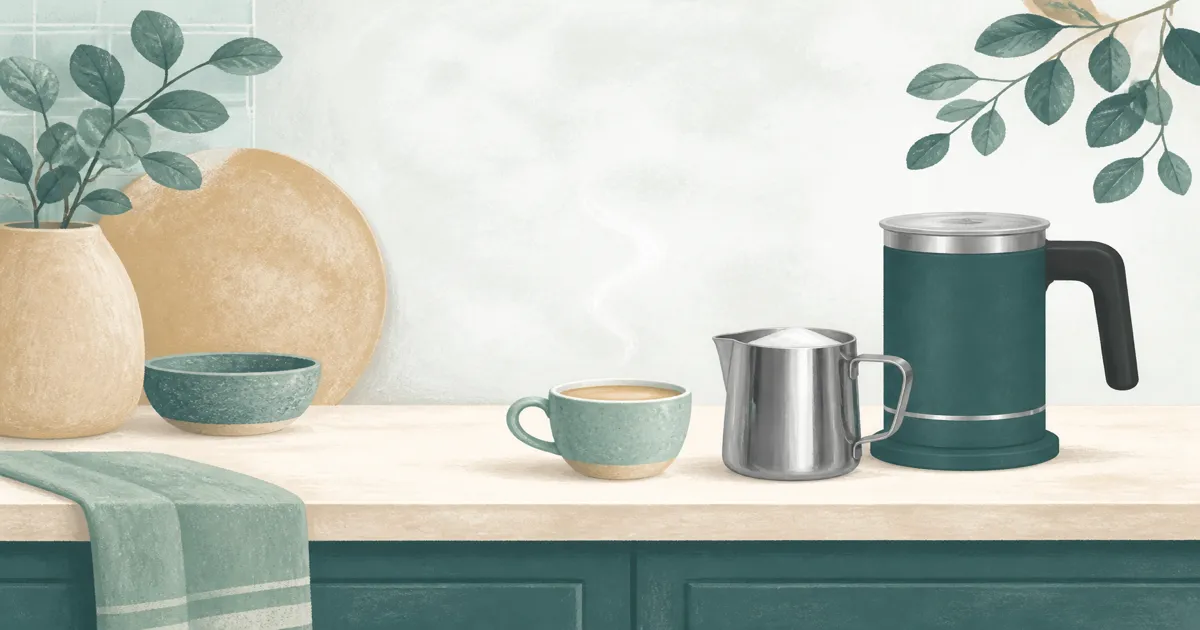
The best milk frother depends on whether you already have steam. This two-piece kit covers push-button foam without a boiler and a proper pitcher when your wand is ready.
Our picks
Milk drinks fail in two common ways: huge dry bubbles sitting on thin coffee, or scalded milk that tastes sweet then flat. The tool matters, but so does stopping at the right temperature and foam level.
This guide compares frother types for home use. It is practical buying advice from specs and common outcomes, not a lab ranking of every Amazon listing. Pair it with espresso machine and beginner guides when you are building a full setup. If your wand already works and you want the technique, read how to steam milk at home.
More milk and prep tools sit in the accessory guides.
A small kit that covers most kitchens
Think in two jobs: heat-and-whisk without a boiler, and wand control when you have steam.
The Nespresso Aeroccino 3 handles the first job. One button, hot foam or cold froth, and no learning curve about tip depth. It is the honest pick for drip drinkers, weak-wand machines, and cocoa nights when you do not want to purge a steam tip.
The Rattleware 12 oz pitcher handles the second job. When your wand is strong enough, a compact stainless pitcher keeps the tip engaged and the pour controllable. Twelve ounces is enough for one latte. Go larger later if you routinely steam for two.
You do not need both on day one. Start with the Aeroccino if you have no usable steam. Start with the pitcher if the wand already works and your only tool is a cereal bowl.
Shop: Aeroccino 3 · Rattleware 12 oz
Steam wand: still the default when it is strong
A good wand injects steam and air so you can stretch milk, then roll it silky. You get microfoam for latte art practice and hotter drinks that hold together.
Weak wands hiss forever and leave large bubbles. If that is your machine, a separate frother is a fair accessory, not a personality failure. Fix technique first: tip depth, pitcher angle, and stop around 140–150°F (60–65°C) for most dairy drinks unless you know you prefer hotter.
Keep a towel next to the machine. Wipe the wand immediately. Purge before and after. Dried milk is the hobby’s most avoidable chore.
Handheld battery frothers
These stick blenders for milk are inexpensive and tiny. Drop them in warm milk and make foam for cappuccino-style drinks or cocoa.
Strengths: price, storage, travel kits, dorm rooms, and offices without an espresso machine.
Limits: they usually make foam, not true microfoam. Heating is separate (microwave or stove). Technique still matters or you get a bubble hat.
Buy one if you want a low-cost upgrade over dumping cold milk into coffee. Do not expect café texture for competitions. For most homes that need heat plus foam, the Aeroccino is the cleaner daily tool.
Electric frother pitchers and push-button units
Stand-alone electric frothers heat and whisk on programs: hot dense foam, hot light foam, sometimes cold foam. They help households that drink lattes without loving wand technique.
Watch capacity markings. Many units are small; fine for one drink, annoying for two large mugs. Nonstick coatings need soft sponges. Whisk rings go missing in dishwashers, so note spare parts.
These shine for people with super-autos that make mediocre milk, or drip drinkers who want café-ish texture without buying a semi-auto. If you already own strong steam, an electric pitcher is optional redundancy.
Matching foam to the drink
- Latte: Less foam, more silky milk.
- Cappuccino: More foam, still integrated, not dry styrofoam.
- Flat white: Thin microfoam layer; wand skill helps most.
- Hot chocolate: Frothers help mix and lighten; do not scorch cocoa on the stove while chasing bubbles.
Plant milks vary. “Barista” formulations usually hold air better. Start with slightly cooler targets because some alternatives break when pushed too hot.
Pitcher size and daily workflow
If you use a wand, a 12–20 oz stainless pitcher covers most single drinks. Too large a pitcher makes it hard to keep the tip engaged. Too small overflows when you stretch.
For handheld sticks, any mug works, but a taller cup reduces splash. For electric units, follow the min/max lines. Underfilling can burn; overfilling makes a mess.
Cleaning is part of the product. Choose tools you will rinse every time. A fancy frother that smells like yesterday’s oat milk is not an upgrade.
When the frother is not the bottleneck
If espresso tastes sour or bitter before milk hits the cup, fix grind and dose first. See best burr grinder for espresso and the wider coffee grinder guide. Milk can hide faults for one sip; it will not save a chaotic shot.
If you are still choosing a machine for milk drinks, prioritize steam power in the best espresso machine guide rather than stacking three frothers on a weak boiler.
Practical buying checklist
- Do you already have usable steam? Prefer wand + pitcher.
- Need heat + foam with buttons? Electric pitcher.
- Need cheapest foam for cocoa and casual lattes? Handheld.
- Drinking mostly plant milk? Check reviews for that milk type.
- Willing to clean it daily? If not, simplify.
Dairy vs plant milk notes
Whole dairy milk is the easiest training milk for wand texture because fat and protein help foam stay glossy. Two percent still works for many drinks. Nonfat foam can look tall and then collapse into watery coffee.
Oat barista blends are the usual plant favorite for espresso drinks. Almond and coconut vary more by brand. Start with cooler temperatures and shorter stretch times. If the milk smells scorched or looks grainy, you overheated it. Pour out and try again rather than stirring bitterness into a good shot.
Keep a separate small pitcher if you switch between dairy and strongly flavored plant milks. Residual flavors travel.
A simple practice routine for wand users
Fill the pitcher just above the start of the spout curve for one drink. Purge the wand. Tip just under the surface until you hear a short paper-tearing sound, then bury the tip slightly to roll the milk. Stop at temperature. Tap and swirl to settle bubbles. Pour soon while the texture is alive.
Two minutes of that practice beats watching ten latte art videos before you can make a flat weekday cappuccino. The best milk frother, when it is a wand, rewards reps more than accessories.
The best milk frother overall is the one that matches the drinks you actually make, not the one with the most programs on the box.
When the shot side of the bar is messy, fix puck workflow with an espresso tamper and an espresso knock box before you buy another frother. More accessory and machine writing lives on the blog. Start from the homepage when you are mapping the full home bar.
Frequently Asked Questions
What is the best milk frother if I already own an espresso machine?
Use the steam wand first, with a small stainless pitcher like the Rattleware 12 oz. Add a separate frother only if steam is weak, you want chocolate drinks without the wand, or you need a backup for guests.
Handheld frother or electric pitcher?
Handheld sticks are cheap and small. They make foam for coffee drinks but rarely silky microfoam. Electric pitchers like the Aeroccino 3 heat and froth with less technique.
Can I froth oat or almond milk?
Yes, with caveats. Barista-style plant milks usually texture better. Keep temperatures moderate; many alternatives split when overheated.
Do I need a metal pitcher if I have a wand?
A small stainless pitcher helps a lot. Size the pitcher to the drink so the wand tip stays under control.
Is frothed milk only for espresso?
No. Frothers help with matcha, cocoa, and stronger drip coffee drinks. Match the foam level to the drink so you do not drink a bubble cap.
How hot should frothed milk be?
Stop most dairy drinks around 140 to 150°F. Plant milks texture better on the cooler side, since many alternatives split when they get too hot.
How do I clean an electric milk frother?
Rinse the whisk and pitcher after every use, since dried milk film is hard to remove and smells. Nonstick coatings need soft sponges, and small whisk rings can go missing in the dishwasher.