How to Steam Milk at Home: Pitcher Size, Temp, and Texture
Espresso machines
Steaming milk at home is a short sequence: cold milk, tip just under the surface, then bury the wand and stop around 140 to 150°F. A proper pitcher and a clip thermometer make that repeatable.
Our picks
Steamed milk is air plus heat plus a whirlpool. The steam wand injects both. If you only heat, you get hot milk. If you only inject air, you get bubbles. The weekday skill is a short stretch, then a roll that polishes those bubbles into a glossy pitcher.
This is practical home advice, not a claim we certified every wand on Amazon. A beginner espresso machine with a real steam wand is enough. Super-automatics with a panarello sleeve can still heat milk. They just give you less control.
More machine and technique help sits in the espresso machine guides.
The two-piece kit
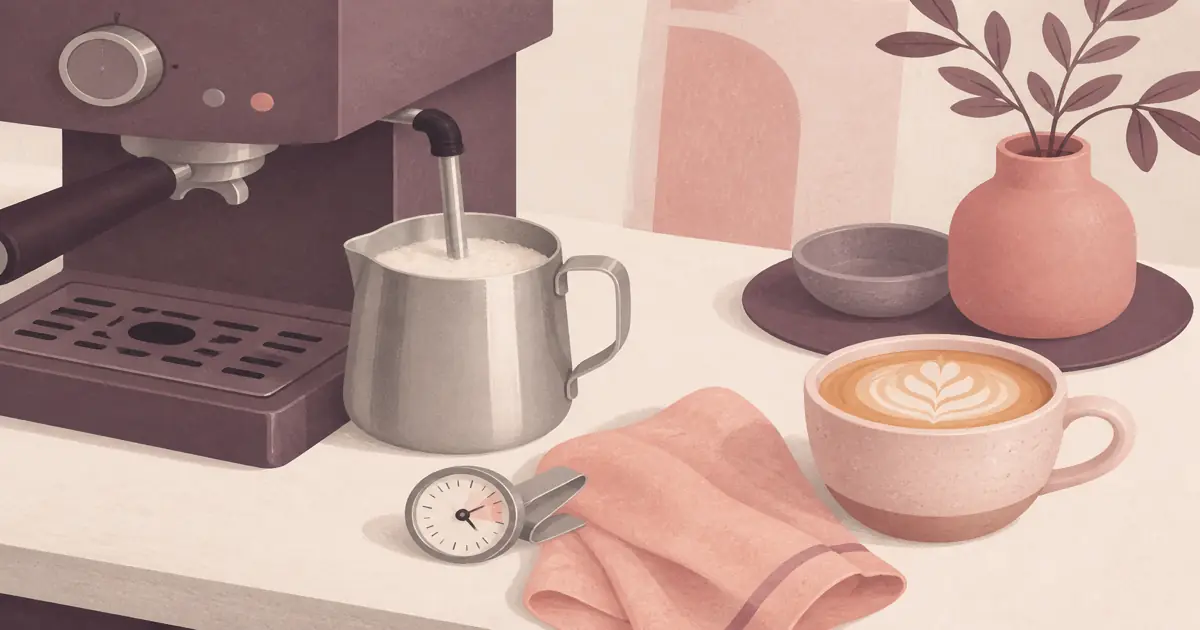
Fill the Rhinowares 20 oz professional pitcher to the lowest interior mark, or just below the spout start. Too little milk scorches. Too much milk explodes out the top when it expands.
Clip the CDN 5-inch frothing thermometer on the pitcher wall so the stem sits in the milk, not against the metal. You are training your hand. The dial is the honest backup. For dedicated clip-on picks, see our milk thermometer guide.
Purge the wand into the drip tray before you start. Water in the first second makes thin, sad foam.
Stretch, then spin
Keep the tip just under the surface at the start. You should hear a gentle paper-tearing sound, not a screaming whistle. The milk should rise a little. For a latte, that might be a second or two. For a cappuccino, a bit longer. Then bury the tip and angle the pitcher so the milk spins.
The whirlpool folds big bubbles into the liquid. When the thermometer hits the mid-140s, kill the steam. Tap the pitcher on the counter and swirl. The surface should look shiny, not foamy like bubble bath.
If you hear a harsh screech, the tip is too deep with no stretch, or the wand is starving. If you see soap bubbles that will not sink, you stretched too long.
Temperature without scorching
140 to 150°F is the tasty zone for most people. 160°F is where milk tastes cooked. If you overshoot, do not keep steaming “to fix it.” Pour what you have and start colder next time.
Whole milk is the easiest teacher. 2% works. Nonfat makes stiff foam that is harder to pour. Barista oat can be excellent if you stay on the cool side of the range.
Weak wands and workarounds
Some small machines take forever. Steam one drink at a time. Rest the boiler. A tiny pitcher helps a weak wand because you are heating less mass. If the wand never makes microfoam, use it for hot milk and keep a standalone frother for texture. That is not failure. That is matching the tool.
Wipe the wand with a damp cloth immediately. Purge again. Milk left on a tip becomes concrete. The cleaning guide covers the daily wipe that keeps steam holes open.
Pouring into the cup
Start pour in the center from a little height to sink through the crema, then lower the pitcher and slow down if you want a simple heart. Or just fill the espresso cup with glossy milk and drink it. Texture first. Art later.
If the espresso sits too long, the milk still matters, but the shot dies on the counter. Steam while the shot finishes, not five minutes later.
Two drinks, plant milk, and leftover milk
If you are making two lattes, steam a little more milk in the 20 oz pitcher rather than running the wand twice from empty. Split the pitcher between cups while it is still spinning. Leftover steamed milk does not re-steam well. It goes dull. Use it in cocoa or dump it.
For oat, almond, and soy, buy the “barista” carton when you can. Those are built to stretch. Keep the thermometer on the cool side of 140°F. Plant milks split when they get too hot, and they do not always tell you until the cup looks curdled.
If the wand has a plastic panarello sleeve, you can still follow the same idea: start with the holes near the surface, then sink. The sleeve adds extra air, so your stretch window is shorter. Stop earlier than you think.
Keep a towel on the counter. First weeks are drippy. That is cheaper than buying a third pitcher because the first one rolled off the board.
What “good” looks like
Good steamed milk pours in a ribbon. It sits in the cup with a thin glossy layer, not a dry cap you have to spoon. It tastes sweet without sugar. Bad milk is either soup (no air) or foam you could stand a spoon in (too much air).
Practice on water with a drop of soap if you want to save milk during the first week. Then switch to real milk because water does not behave the same at temperature.
Bottom line
How to steam milk at home is a short loop: purge, stretch, spin, stop at 140 to 150°F. Keep the 20 oz Rhino pitcher and the CDN clip thermometer next to the machine until your hand knows the heat. Wipe the wand every time. That habit matters more than a fancy pitcher finish.
More machine and milk notes live on the blog. The homepage lists starter machines if your wand is still a decorative pipe.
Frequently Asked Questions
How hot should steamed milk be?
Most drinks taste best around 140 to 150°F. Past 160°F the milk goes sweet-then-cooked. If you do not have a thermometer yet, the pitcher should be hot to the touch but not painful.
How to steam milk at home if my wand is weak?
Keep the pitcher smaller, start with less milk, and give the wand a moment to recover between drinks. A separate milk frother is the backup when steam never quite stretches.
Whole milk or oat?
Whole milk is the easiest texture. Barista-style oat works if you keep the temperature moderate. Cheap thin oat often splits.
Why is my foam dry and stiff?
You aerated too long. Stretch only until the volume grows a little, then bury the tip and spin. Stiff foam is meringue, not latte milk.
Do I need latte art?
No. Glossy milk that pours in a ribbon is the goal. Patterns are optional and show up after the texture is right. When you are ready, use our how to make latte art guide for pitcher pour practice.
How full should I fill the milk pitcher?
Fill the Rhinowares pitcher to the lowest interior mark, or just below where the spout starts. Too little milk scorches, and too much expands out the top.
Why is my steamed milk not glossy?
If you see bubbles that will not sink, you stretched too long. Stretch briefly, then bury the tip and let the whirlpool fold the bubbles in until the milk looks like wet paint.