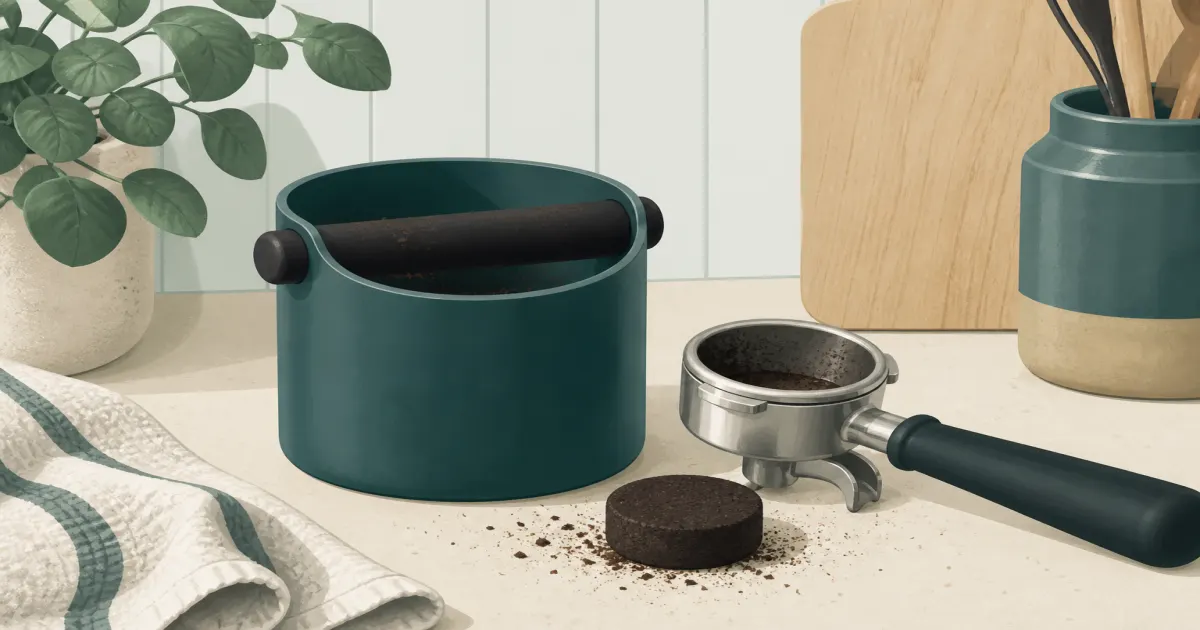
Espresso Knock Box: Size, Bar, and Countertop Cleanup
Accessories
An espresso knock box is a small bin with a bar so you can dump spent pucks without cracking your sink. A sturdy freestanding box keeps weekday cleanup in one place.
Our picks
A knock box is not glamorous. It is the bin where spent espresso pucks go after you pull a shot. Without one, people bang portafilters on trash rims, sinks, and dishwasher doors. That chips enamel and sprays grounds everywhere.
This guide covers home boxes, not cafe floor bins. Pair it with a beginner espresso machine setup and a tamper workflow so cleanup stays as simple as the shot.
More cleanup and prep gear lives in our espresso accessory guides.
What a knock box actually does
You lock out the portafilter, knock the spent puck against a rubber or metal bar, and the puck drops into a bucket. The bar takes the impact so your sink does not.
Good boxes stay put. Bad boxes slide, tip, or put the bar so high you chip the spout on the way in.
You still need to empty the bucket. The box only gathers mess in one place.
A simple counter pick
If you pull daily doubles and hate cleaning the sink strainer, a freestanding box is enough. The Normcore 1.8L knock box is a clear example of what to look for: weight so it does not walk, a soft bar so you are not knocking steel on steel, and enough volume that you empty it once a day instead of after every shot.
Confirm the bar height against your portafilter before you commit. Spouted and bottomless baskets clear differently. Tall naked portafilters need more vertical room.
Shop the Normcore box on Amazon when you are ready: Normcore 1.8L knock box.
A dedicated mug or small metal bowl still works if you brew once a week. Upgrade when wet grounds become a daily habit and the sink strainer starts looking like a compost bin.
Mini vs full-size boxes
Mini knock boxes sit beside cramped machines. They hold a few pucks. Empty them often or they overflow mid-morning.
Full-size boxes hold a day or weekend of home use. They need more counter depth. If your machine already owns the only free foot of space, a mini is smarter than a box that forces the grinder off the counter.
Drawer-style bins and under-cabinet mounts exist for built-in looks. Only buy those if your cabinet layout matches. Most home bars do fine with a freestanding bucket.
Bar height and portafilter fit
The bar should meet the portafilter ears or basket edge so a firm tap drops the puck. Too high and you scrape the spout. Too low and you dig into wet grounds with the basket rim.
Test with your actual portafilter if you can. Rubber sleeves on the bar cut noise and protect metal. Replace sleeves when they crack so you are not knocking steel on steel.
Quiet mornings and shared kitchens
Knocking is loud. Soft rubber bars and plastic buckets help. A towel under the box cuts counter rattle.
If you share a wall with a bedroom, empty into a compost caddy more often and knock with less force once the puck is loose. Technique helps more than buying three “silent” gadgets.
Liners, smell, and emptying
Paper or compostable liners make emptying easier. They also trap moisture, so swap them before they tear.
No liner? Rinse the bucket with hot water and a drop of dish soap. Dry it. Wet coffee left for days smells like a gym bag.
Some people keep a small compost pail under the sink and dump the knock box into it once a day. That is a solid home pattern.
Placement next to the machine
Put the box on your dominant side within a short swing of the group head. Stretching across the grinder to knock is how grounds hit the floor.
Keep the grinder and knock box from fighting for the same corner. Dose, tamp, pull, knock should feel like a short loop, not an obstacle course.
Wipe the counter after the first week of use. You will learn where micro-grounds land and can nudge the box an inch.
When you can skip a dedicated box
If you pull one shot a week, a dedicated mug or small metal bowl can work. Upgrade when you brew daily and hate cleaning the sink strainer.
Cafe-style floor bins are overkill for most apartments. Save floor space for a better grinder if you are still on a blade unit. See the wider coffee grinder guide before stacking accessories.
Pucks, compost, and plumbing myths
Spent pucks are mostly damp grounds. They belong in compost or trash, not down the disposal as a daily habit. A disposal can handle an accident. It does not love a week of espresso waste.
If you garden, cool pucks fully before adding them to a compost mix. Hot, dense clumps mat together. Break them up with the knock so air can move through the pile.
Some home baristas rinse the portafilter into the knock box. A little water is fine. Flooding the bucket turns it into coffee soup that smells faster and weighs more when you carry it out.
Keep a small brush near the box for dry scatter. Thirty seconds of cleanup after breakfast beats scrubbing dried rings off the backsplash on Sunday.
Buying checklist
- Bar height works with your portafilter.
- Bucket capacity matches how often you empty trash or compost.
- Base is heavy or grippy enough not to walk across the counter.
- Materials you can rinse without special cleaners.
- Noise level you can live with at 6 a.m.
An espresso knock box will not improve shot flavor. It will protect your sink and keep the bar usable. That is enough for a weekday home setup.
If you are still shopping machines, read the main espresso machine guide before you buy every accessory on day one. A box is cheap insurance after the machine and grinder are settled. Keep the rest of the station honest with a short cleaning routine so grounds and milk film do not pile up beside the box.
More machine and accessory guides sit on the blog. Use the homepage when you are planning the full counter layout.
Frequently Asked Questions
Do I need a knock box for home espresso?
Not required, but it saves your sink and keeps wet pucks in one place. A sturdy cup works in a pinch. A real box is cleaner once you pull daily shots.
Mini knock box or full size?
Mini fits tight counters and travel kits. Full size holds more pucks before you empty it. Choose based on how often you brew, not how cafe the photo looks.
Why does my knock box smell?
Old grounds go sour. Empty daily or every other day, rinse the bucket, and dry the bar. A liner helps if you hate scrubbing.
Can I knock into the trash?
You can. Expect sticky bags and missed scraps on the floor. A box localizes the mess next to the machine.
Metal or plastic?
Metal lasts and looks tidy. Plastic is lighter and quieter. Both work if the bar is solid and the bucket does not tip when you knock hard.
How big is the Normcore knock box?
The Normcore box holds 1.8 liters, which is enough for a day of home doubles before you empty it. That suits daily brewing, though a mug or small bowl still works if you only pull a shot a week.
Where should I put my knock box?
Put it on your dominant side within a short swing of the group head. Reaching across the grinder to knock is how grounds end up on the floor.