Best Espresso Tamper: Size, Depth, and Distribution Basics
Accessories
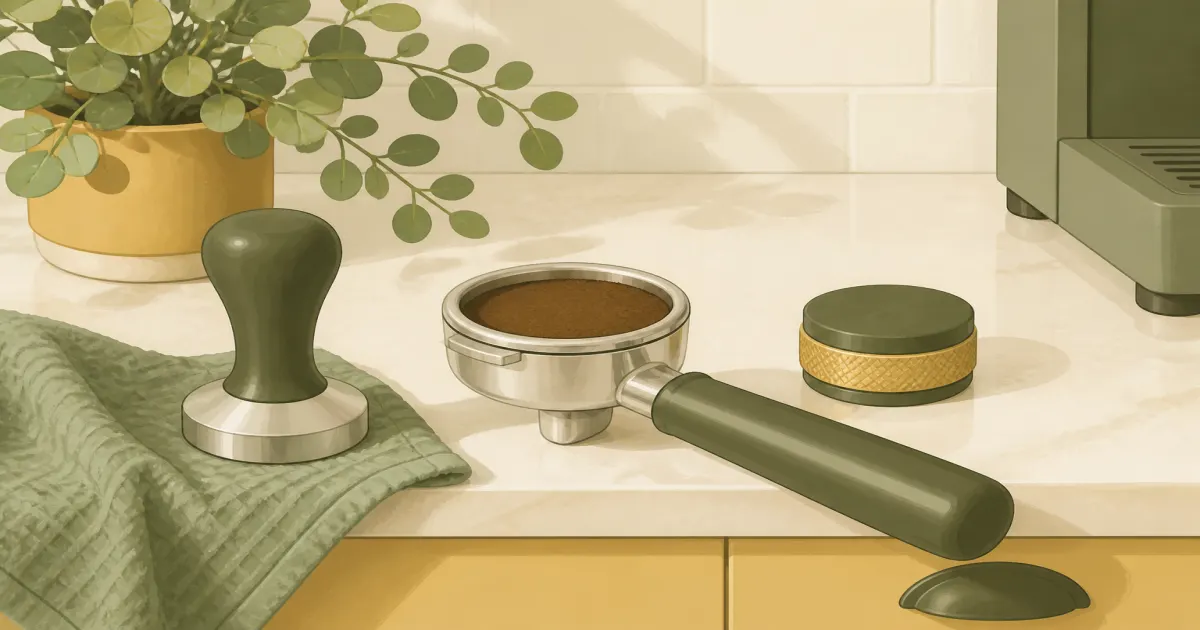
The best espresso tamper matches your basket diameter and sits level. This two-size Normcore kit covers 58mm baskets and common Breville 54mm portafilters.
Our picks
Tamping compresses ground coffee in the portafilter so water meets an even bed. A bad tamp leaves high spots, channels, and sour-bitter chaos in the same shot. A good tamp is boring and repeatable.
This guide covers tampers and simple distribution for home bars. It is practical advice from common basket sizes, not a claim we stress-tested every Amazon set. Pair it with a burr grinder for espresso and a beginner machine before you chase advanced tools.
When clumps show up before the tamp, a WDT tool for espresso is the next small step. A dosing funnel keeps those grounds in the basket while you stir. A tamping mat steadies the portafilter and protects the counter while you press. An espresso puck screen can follow once the basics are steady.
See how the other prep tools fit together in our espresso accessory guides.
Pick the size that matches your machine
Wrong diameter is the most common buying mistake. A 58 mm tamper in a 54 mm basket will not seat. A small tamper in a large basket leaves a ring of loose coffee that channels.
Check your basket stamp or measure across the inside. Popular home sizes include 51 mm, 54 mm, and 58 mm. Some pressurized baskets are odd sizes. Measure yours.
For most 58mm precision baskets, the Normcore 58.5mm spring-loaded tamper is the kit piece we recommend. The slightly oversized base is meant to seat edge to edge in modern 58mm baskets.
If you own a Breville Bambino, Barista Express, or similar 54mm portafilter, buy the Normcore 53.3mm instead. Same spring idea, correct diameter. Do not “make do” with a 58mm tool on a 54mm basket.
Shop: Normcore 58.5mm · Normcore 53.3mm
If you own two machines with different baskets, you need two tampers. One “universal” disc rarely fits both well.
Handle feel and base style
Handles are personal. Palm-fit handles reduce wrist twist. Thin sticks look cafe-cool and can hurt during long sessions.
Flat bases are the default for most home advice. Keep the base clean. Coffee oils make it slippery and leave marks in the puck.
Heavy tampers help some people stay level. Heavy is not the same as better. If a heavy tamper makes you tip the portafilter, choose a lighter one you can control.
Calibrated and spring tampers
Calibrated tampers click or stop around a set pressure. They help beginners who used to lean with their full body weight one day and tap lightly the next.
They do not fix clumps, wrong grind, or a tilted portafilter. Use them as training wheels, then decide if you still want the click.
If the spring mechanism feels gritty, clean it. Coffee dust gets everywhere.
Distribution before the press
Distribution means spreading grounds so the bed is level before you tamp. Options:
- Finger or nutating shake: Lightly settle the portafilter and sweep high spots. Free and fast.
- Needle tools: Stir clumps gently, then tidy the top. Easy to overdo and make a mess.
- Palm distributors / leveling discs: Spin or press lightly to flatten the surface to a set depth.
Depth matters. A distributor set too deep digs into the dose. Too shallow and you only polish the peaks. Start conservative.
You do not need every tool. Many solid home shots use a quick shake, a level tamp, and a clean knock box routine.
How hard to tamp
Aim for firm and level, not gym-max. Once the puck stops compressing, extra force mostly strains your wrist. Consistency beats chasing a viral poundage number.
Keep the portafilter braced on a tamp mat or stable counter edge. Tamping in mid-air invites tilted pucks. A bottomless portafilter makes a tipped tamp obvious in the first seconds of the shot.
After tamping, wipe the basket rim so the group gasket stays clean. Loose grounds on the rim cause messy lock-ins.
When the stock tamper is enough
If you pull weekend shots on a beginner machine and the plastic tamper fits, you can wait. Upgrade when:
- The diameter is wrong.
- The handle hurts.
- You cannot keep the base level.
- You are ready to care about distribution because grind is already consistent.
Spending on a tamper before a decent grinder is backwards. Fix grind first. See the coffee grinder overview if you are still on blades.
Workflow that stays weekday-simple
- Dose into a dry basket.
- Distribute (shake, needle, or leveling tool).
- Tamp level once.
- Wipe the rim. Pull the shot.
- Knock out into a box. Rinse tools if milk or oils got on them.
That loop matters more than owning a matching copper set. The best espresso tamper is the one that disappears into the loop without fighting your basket.
Mats, stands, and counter protection
A small tamp mat keeps the portafilter from scarring the counter and gives you a non-slip perch. It is cheaper than refinishing butcher block. A dedicated tamp station is optional furniture for people who love the hobby aesthetic.
If you tamp on a cutting board, pick one you will not later use for garlic. Coffee oils linger. Keep brew tools on their own slab when you can.
Store the tamper on a clean stand or in a drawer where it will not pick up flour and crumbs. A dirty base prints junk into the next puck.
Replace the mat when it cracks or stays permanently wet. A sour-smelling pad next to clean cups is a bad look and a worse smell.
Buying checklist
- Exact diameter for your basket.
- Base style you will stick with (usually flat).
- Handle you can press without wrist pain.
- Optional calibration only if it helps your consistency.
- Optional distributor only after grind is stable.
Channeling still happens with a perfect tamper if the grind is wrong or the basket is dirty. Clean the basket and shower screen on a schedule, then judge the tool. Accessories amplify good basics; they do not replace them.
More espresso setup writing lives on the blog. Start from the homepage when you are planning machine, grinder, and small tools together.
Frequently Asked Questions
What size tamper do I need?
Match the basket. Many home machines use 58 mm. Entry Breville machines often use 54 mm (buy a 53.3 mm base). Measure the basket, do not guess from a photo.
Do I need a calibrated tamper?
Helpful if your tamp pressure is all over the place. Not magic. Distribution and a level press still matter more than a spring click.
What is a distribution tool?
A palm or spinning tool that levels grounds in the basket before you tamp. It reduces clumps and high spots. Use light passes, not a workout.
Flat or convex base?
Flat bases are the common home default. Convex bases exist; learn one style and stay consistent.
Can I use the plastic tamper that came in the box?
For a week, sure. Upgrade when the plastic flexes, the diameter is wrong, or you want a handle that does not hurt your palm.
Which Normcore tamper fits a Breville?
Buy the Normcore 53.3mm for a Breville Bambino, Barista Express, or similar 54mm portafilter. The 58.5mm base is for 58mm precision baskets, not Breville 54mm machines.
How hard should I press when tamping?
Press firm and level until the puck stops compressing. Extra force mostly strains your wrist, and a consistent level press matters more than a specific number.