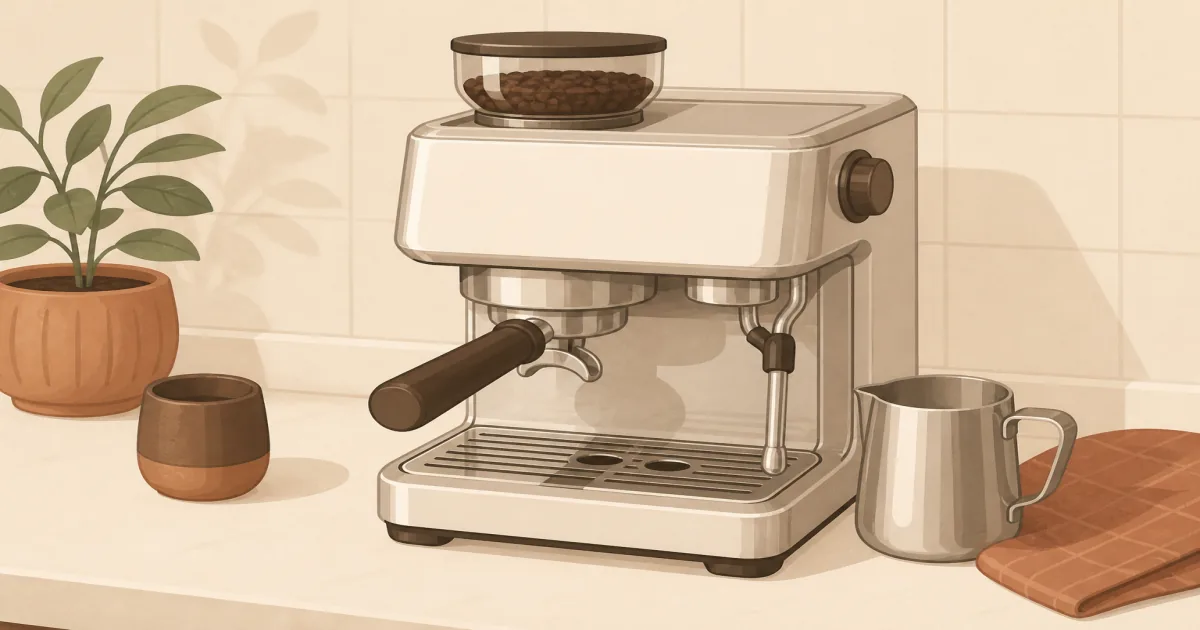
Breville Barista Pro (2026): Who Should Buy BES878
Espresso machines
The Breville Barista Pro suits buyers who want a faster all-in-one semi-auto with an LCD workflow. Skip it if you already plan a separate grinder from day one.
Our picks
The Barista Pro (BES878) sits above the Express in Breville’s all-in-one line. Same basic job: grind, tamp, pull, steam. The Pro adds ThermoJet heat-up and an LCD that shows grind and extraction progress. That is why people search the Pro by name instead of another generic “espresso machine with grinder.”
If you want the broader brand stack, start with best Breville espresso machine. If you are still under a hard budget ceiling, compare against our best espresso machine under $1000 picks. This page is for shoppers deciding whether the Pro itself is worth the step up.
See how the rest of the line compares in our Breville and espresso machine guides.
Who the Barista Pro is for
Buy it if you want one appliance that covers weekday espresso and milk drinks without shopping a second big box on day one. The screen helps when you are still learning how long a shot should take. Fast heat-up matters on rushed mornings more than another chrome badge.
Skip it if you already know the built-in mill will annoy you. In that case, a compact machine plus a dedicated espresso burr usually tastes better later. Skip it if counter depth is already tight and you only make one drink a day. A smaller Bambino-class machine wastes less space.
How the Pro differs from the Express
Both machines grind into a portafilter, use a 54mm ecosystem, and steam milk with a real wand. The Express is the older, simpler all-in-one story. The Pro is the faster, more guided version of that story.
ThermoJet is the daily feel change. You are not waiting through a long warm-up before the first cup. The LCD is the learning change. Progress bars beat guessing whether the machine is still grinding or already extracting.
Neither machine replaces a strong separate grinder if taste is the main hobby. Both beat a blade grinder and a mystery capsule pod for people who want to learn real espresso habits at home.
Shop: Breville Barista Pro on Amazon
When the Barista Express is enough
The Barista Express still makes sense when the Pro’s price jump is money you would rather spend on beans, a scale, or a better pitcher. You get the same one-box idea with a more analog interface and a slower heat-up. Plenty of first home bars still start here and upgrade later.
Read the dedicated Barista Express guide if that is the machine in your cart. Do not buy the Pro just because the name sounds more serious. Buy it when the faster heat-up and screen are features you will use every morning.
Shop: Breville Barista Express on Amazon
When a Bambino Plus kit is smarter
The Bambino Plus is the better path when milk drinks are the weekday job and you accept a separate grinder from the start. Fast heat-up, automatic milk help, and a small footprint beat an all-in-one that you already plan to outgrow.
Pair it with a real espresso-capable burr grinder. A strong machine with a weak grind still tastes flat. That two-part kit often lands near the Pro’s total spend and ages better for taste-focused owners.
Shop: Breville Bambino Plus on Amazon
Workflow that keeps shots consistent
Use fresh beans, weigh dose when you can, and write down grind settings that work. The built-in mill has a limited adjustment window. Small changes matter. Purge a little coffee when you change beans so the old grind does not confuse the new one.
Steam milk after the shot if your routine prefers that order, and give the wand a quick wipe every time. A dirty tip is how weekday lattes turn into chores. Descale on the schedule your water hardness needs, not when the machine is already choking.
If you are still learning milk texture, a short steam milk at home practice loop helps more than buying another accessory pack. The Pro’s wand can make microfoam. It still needs a steady pitcher habit.
Cleaning and water care
Empty the drip tray before it overflows into the cabinet. Knock the puck while it is still warm so it does not cement in the basket. Wipe the group gasket area so oils do not build a sticky ring.
Water quality decides how often you descale. Soft, filtered water slows mineral buildup. Very hard tap water will make any all-in-one feel clogged sooner than the brochure suggests. Keep a descaler you already trust on the shelf so the alert does not become a month-long postponement.
Value traps to avoid
Do not treat “Pro” as a dual-boiler promise. This is still a single heating path that switches between brew and steam. If you need simultaneous brew and steam every morning for a crowd, look at a true dual-boiler machine instead.
Do not ignore counter depth and tank access. The Pro is a full-size all-in-one. Measure before you fall for a color finish.
Do not expect the built-in grinder to match a dedicated espresso mill forever. Plan the upgrade path honestly on day one.
Bottom line
Buy the Breville Barista Pro when you want a faster all-in-one with an LCD that makes weekday espresso less opaque. Buy the Barista Express when the classic one-box starter is enough. Buy the Bambino Plus when you will fund a better separate grinder and want a smaller milk-first machine.
More machine and grinder help lives on the blog. Start from the homepage when you are mapping the rest of the kit.
Frequently Asked Questions
Is the Breville Barista Pro worth buying in 2026?
Yes, if you want an all-in-one semi-auto with faster heat-up and a clearer display than the Express. It is less convincing if you already know you will chase a better separate grinder.
Barista Pro vs Barista Express: which should I buy?
Buy the Pro for ThermoJet speed and the LCD workflow. Buy the Express when you want the classic one-box starter for less money. Both teach real portafilter habits. See our Barista Express guide for the older sibling.
Does the Barista Pro have a good built-in grinder?
It is good enough for many medium espresso blends and weekday drinks. It becomes the limit when you want tiny grind changes or swap light roasts often.
Is the Barista Pro good for beginners?
Yes, if you like guided feedback on a screen and want grind plus machine in one purchase. You still need to learn dose, distribution, and cleanup.
Barista Pro vs Bambino Plus: which is better?
The Pro wins when you want one box. The Bambino Plus wins when you will buy a better separate grinder and care about fast milk drinks in a smaller footprint.
How long does the Barista Pro take to heat up?
ThermoJet is ready in about three seconds for brew temperature, then you move to steam. That is the main daily feel upgrade over older thermoblock all-in-ones.
Should I buy the stainless or a color finish?
Pick the finish that matches your kitchen. Confirm the BES878 model on the listing so you are not buying a different Barista-series machine by mistake.