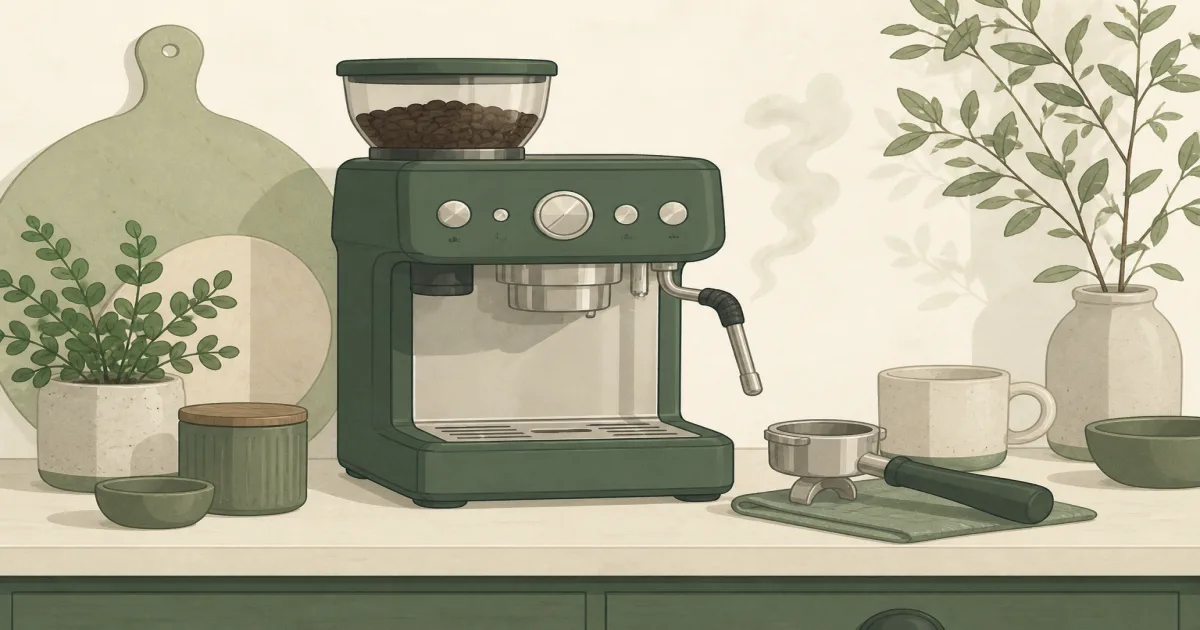
Espresso Machine with Grinder: Combo Picks Worth the Counter Space
Espresso machines
An espresso machine with a built-in grinder saves space and one shopping trip. The tradeoff is grind quality. Here are three combos that still make sense for weekday coffee.
Our picks
An espresso machine with grinder looks like the easy win. One box, fresh beans, milk drinks at home. The catch is that the mill inside is usually the weakest link. You can still get excellent weekday espresso if you pick a combo that matches how you actually drink coffee.
For a wider machine field, see best espresso machine. If you are brand new, pair this with best espresso machine for beginners.
More combo and separate-box paths live in our combo machine guides.
When a combo is the right buy
Choose a combo if at least two of these are true:
- Counter space is tight.
- You will not buy a second grinder in the next year.
- You want guests to make coffee without a tutorial.
- You drink espresso and drip, and refuse two appliances.
Skip the combo if you already own a strong espresso burr grinder, or you know you will chase light-roast dial-in. In that case, a simpler machine plus a dedicated espresso grinder usually tastes better.
Our picks at a glance
Top pick: Breville Barista Express
The Breville Barista Express is still the espresso machine with grinder most people should try first. You grind into a portafilter, pull a shot with PID help, and steam milk by hand. That workflow teaches real habits without buying two big boxes on day one.
The built-in conical burrs are good enough for medium espresso blends and many weekday beans. They will not match a dedicated espresso mill for tiny grind steps. Clean the chute and wipe oils so stale grounds do not haunt later shots.
If your budget is under $1000 and you want this style of machine, also skim best espresso machine under 1000.
Best all-in-one: Ninja Luxe Café
The Ninja Luxe Café earns the second card when one appliance has to cover espresso, drip, and cold brew. The integrated grinder and assisted tamp reduce early mistakes. Hands-free milk help fits rushed mornings.
It is larger and heavier than a compact semi-auto. That is the trade for three brew modes. If you only care about espresso, the Barista Express is usually the cleaner long-term path.
Best button coffee: De'Longhi Magnifica Start
The De'Longhi Magnifica Start is for people who want bean-to-cup drinks without learning distribution and tamp. One-touch recipes plus a built-in grinder cover most guest drinks. You still clean the brew unit and run descaling on schedule.
You give up fine shot control. If learning espresso is the hobby, buy a semi-auto combo or a separate setup instead.
What to check before you buy any combo
Grind adjustment range. Espresso needs fine control. Coarse-only mills waste the machine.
Retention and cleanup. Peek at how easy the hopper, chute, and drip tray are to empty. Stale grounds taste like mystery bitterness.
Steam vs auto milk. Manual wands teach texture. Auto systems save time. Pick the one you will use daily.
Parts and baskets. Confirm you can buy replacements. Combo units age better when seals, filters, and water parts stay available.
Water. Hard water scales boilers and tanks fast. Filtered water in the maker’s range protects taste and hardware.
Combo vs separate gear
A fair middle path is a compact machine now and a better grinder later. Many people outgrow the built-in mill first. Keep that in mind before you spend for chrome you will not use.
A simple first week on a combo
- Use one medium espresso-friendly bean for seven days.
- Write dose, grind mark, and shot time for each morning pull.
- Change only grind when the shot is clearly fast or choked.
- Wipe the steam wand every time.
- Empty the grounds and drip tray before they become a science project.
That routine beats buying three accessories in week one. Tools help later. Consistency helps now.
Budget and upgrade paths
Prices move, so shop roles instead of a fixed number. A solid combo should cover heat, pressure, and a grind path that can reach espresso fine. If the listing leans on a weak blade mill or a sealed “mystery burr,” walk away.
After six months, ask one question: are your shots limited by grind steps or by recipe skill? If grind steps feel coarse and clumsy, keep the machine and add a dedicated espresso grinder. If you still dislike the workflow, sell the combo and move to a simpler machine with better separate gear.
Guests change the math. A Magnifica-style super-auto can be the honest house machine even if you personally prefer a semi-auto for tasting. One appliance that people will use beats a shrine nobody touches.
Noise, mess, and apartment reality
Built-in grinders add morning noise. Portafilter combos add grounds on the counter. Super-autos add cleaning cycles and tablet reminders. None of that is a dealbreaker if you expect it. It becomes a dealbreaker if you bought the machine thinking espresso was silent and spotless.
Put a mat under the machine, keep a towel for the wand, and accept that fresh coffee makes crumbs. The blog has accessory guides if you want a cleaner loop without buying another boiler.
Bottom line
An espresso machine with grinder is worth it when space and simplicity beat maximum grind control. Start with the Barista Express for classic semi-auto learning. Take the Ninja Luxe Café when drip and cold brew share the job. Choose the Magnifica Start for honest button coffee.
Browse more gear guides on the blog, or start from the homepage for the full map of Baristapicks articles.
Frequently Asked Questions
Is an espresso machine with grinder better than buying them separately?
It is better for space and simplicity. Separate gear usually tastes better once you care about fine grind steps. Start combo if counter space or budget forces one purchase.
Can a built-in grinder do real espresso?
Yes on decent combos, within limits. Expect fewer micro-adjustments than a dedicated espresso burr grinder. Keep beans fresh and clean the chute often.
What is the best espresso machine with grinder for beginners?
The Breville Barista Express is the safest semi-auto starter for most homes. Choose the Magnifica Start if you want buttons more than learning. Pick the Ninja if drip and cold brew matter too.
Do combo machines need the same cleaning as separate setups?
Yes. Backflush or run tablet cycles as the manual allows, descale on schedule, and wipe milk parts daily. Built-in grinders also need chute and burr attention.
When should I upgrade past a combo?
When your shots are limited by grind steps, not by recipe. Then keep the machine and add a dedicated espresso grinder, or move both pieces up together.
Which combo should I buy for espresso, drip, and cold brew?
Choose the Ninja Luxe Café ES601 when one appliance has to cover all three, or the Breville Barista Express if espresso is the main job and you want hands-on portafilter control.
Is a combo machine good for guests?
Often, yes. A super-automatic such as the Magnifica Start is an honest house machine for guests because one-touch recipes cover most drinks without a tutorial.