Best Coffee Brush for Espresso: Group Head and Grinder
Accessories
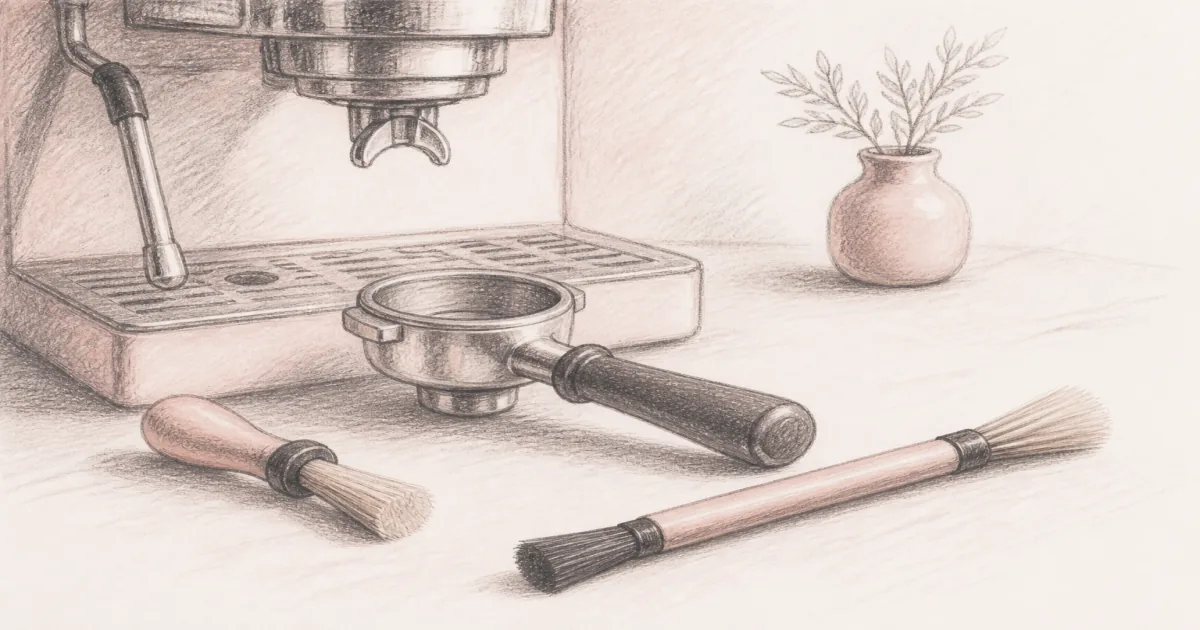
The best coffee brush depends on the mess. Use a stiff group head brush for hot group heads, and a soft grinder brush when the chute and counter need a daily sweep.
Our picks
A coffee brush is a small cleaning tool for grounds that cling to the group gasket, shower screen, grinder chute, and counter. It does not replace detergent backflushing or descaling. It is the daily wipe that keeps those bigger cleans from fighting a crust of dry coffee.
Browse the coffee accessory guides for the wider kit, or start with espresso accessories worth buying if you still need basics. Pair brushing with how to clean an espresso machine so the habit sticks.
Match the brush to the mess
Buying one “universal” kitchen brush often means it is wrong for the hot group and clumsy for the grinder. Two purpose brushes cost little and live near the machine.
Keep both brushes in the same drawer as your blind disk and Cafiza. Tools you cannot see do not get used. A hook under the cabinet works too if you wipe the handle after wet group sessions.
Top pick: CAFEMASY two-piece brush kit
The CAFEMASY Espresso Machine Cleaning Brush Kit is the best coffee brush for the group head on most home machines. The stiffer nylon head reaches the gasket ring, and the slim second brush gets into the corners around the shower screen. There is no water deflector, so keep the rinse light and your hand clear of the steam.
Use it after you knock out the puck and before you lock in a blind disk. Move the brush with the machine’s rinse flowing so grounds wash into the drip tray instead of back into the group.
On E61-style groups, work the brush around the full circle so you are not scrubbing only the front lip you can see. Grounds hide at the back of the gasket and show up later as bitter flecks in the cup.
Skip it as your only brush if your real pain is a dusty grinder bench. Keep the Espresso Supply grinder brush for that job.
Check price: CAFEMASY cleaning brush kit on Amazon
Best for grinder and counter: Espresso Supply grinder brush
The Espresso Supply Coffee Grinder Brush is the single soft brush for dry messes. Its small head reaches into grinder chutes and around burr areas, and the same brush sweeps the counter after you dose into a cup or portafilter.
It is best for people who single-dose and leave a ring of grounds around the mill every morning. A quick sweep beats grabbing a paper towel that smears oil across the bench.
If you grind into a coffee dosing cup, sweep the scale tray and cup rim so yesterday’s fines do not join today’s dose. Static makes those fines stick. A dry brush beats wiping with a damp cloth that cakes the mess.
Skip it for deep group-head scrubbing under steam. That is still the stiff group brush’s job. Power the grinder off before you poke bristles near burrs.
Check price: Espresso Supply grinder brush on Amazon
A simple weekday cleaning loop
- Knock the puck into a knock box.
- Brush the group gasket and screen with the stiff group brush under a short rinse.
- Wipe the portafilter ears and basket rim.
- Sweep the grinder area with the soft grinder brush.
- On detergent days, insert a blind disk and follow your machine’s rinse cycles.
If you also use a dosing funnel, brush the funnel rim when oils build up. Magnets and silicone collect fine dust that flavors the next dose.
What a brush will not fix
A brush will not remove baked-on oils inside a three-way valve. That is the job of a backflush disk and detergent. A brush will not remove mineral scale in the boiler. That is descaling.
If shots taste rancid after you brushed the gasket, keep going into a detergent cycle. Brushing is the daily tidy. Chemistry is the weekly reset on machines that support it.
Steam wand tips need a wipe and purge, not a stiff group brush jammed into the holes. Use the slim second brush lightly if milk has sealed a hole, then purge steam.
Bristle care and replacement
Rinse nylon heads after oily sessions and let them dry standing up. Soft, gummy bristles smear more than they clean.
Replace the stiff group brush when the nylon flares out and no longer reaches under the gasket lip. Replacement heads fit most handles, and the kit is cheap enough to swap outright.
For the grinder brush, shake grounds into the trash instead of rinsing into the sink every time. Wet coffee in soft bristles gets sour fast.
Who should skip a dedicated coffee brush
Skip a specialty brush only if you already own a heat-safe group brush you like and a soft brush for the grinder. Skip novelty wooden sets that look nice in photos and shed bristles into the group.
Also skip buying five brushes before you have a cleaning powder and a blind disk. Chemistry and a sealed portafilter move more oil than another nylon head.
When you want the wider kit view, return to espresso accessories or browse more coffee guides on the blog.
Frequently Asked Questions
What is the best coffee brush for espresso machines?
For the group head, the CAFEMASY two-piece brush kit is the best coffee brush most home bars should buy first. Add an Espresso Supply grinder brush if your grinder and counter stay dusty after every dose.
Do I need a brush if I backflush?
Yes. Backflushing cleans inside the group with a blind disk and detergent. A brush clears grounds from the gasket and screen between cycles. See how to backflush for the full routine.
Can I use a kitchen scrub brush?
Avoid abrasive pads that scratch chrome and soft silicone brushes that melt near steam. Use a heat-aware group brush for the machine and a softer grinder brush for burrs and chutes.
How often should I brush the group head?
A quick brush after dense milk-drink sessions helps. At minimum, brush before a detergent backflush so loose grounds are not baked into the gasket.
Is a group head brush the same as a grinder brush?
No. Group brushes are built for hot, wet metal near the gasket. Grinder brushes are shaped for chutes, dosers, and dry grounds on the bench.
Should beginners buy a brush or a dosing funnel first?
If spills annoy you more than a dirty gasket, start with a dosing funnel. If shots taste muddy after busy weeks, buy the group brush and clean on a schedule.