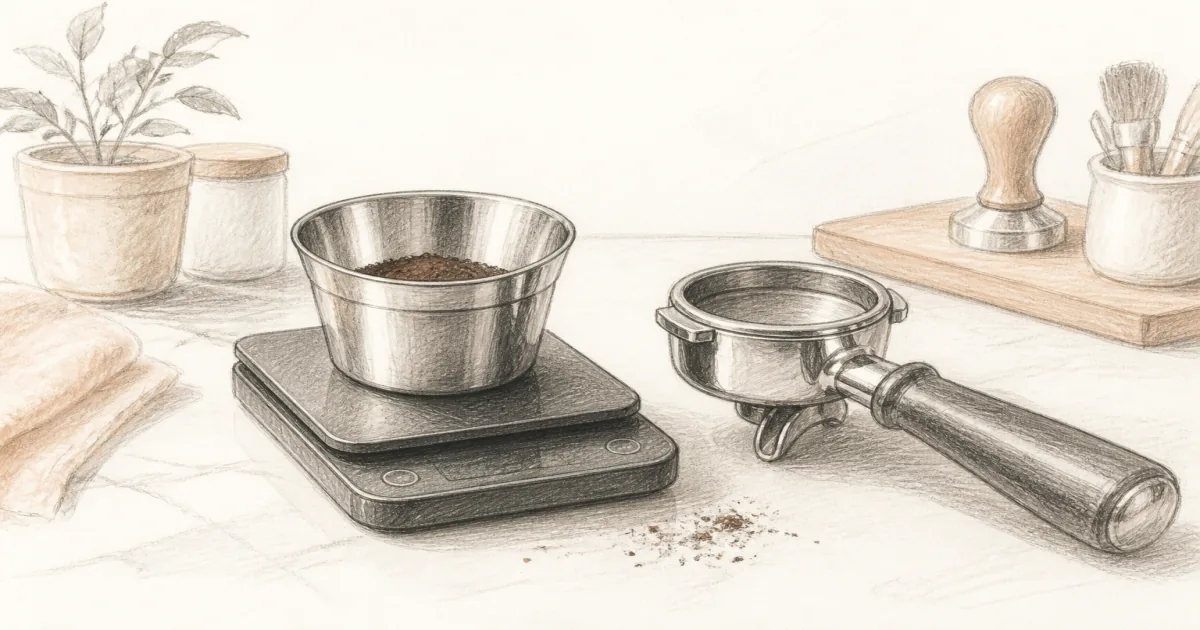
Best Coffee Dosing Cup for Espresso: Weigh, Transfer, Pour
Accessories
The best coffee dosing cup catches a weighed dose from the grinder and pours it cleanly into the basket. Match 58mm or 53.3mm to your portafilter before you buy.
Our picks
A coffee dosing cup is the middle step between grinder and portafilter. You grind into the cup, check the weight on a scale, then pour into the basket. It keeps the dose honest and the counter cleaner when you single-dose.
Browse the espresso accessory guides for related tools, or start with espresso accessories worth buying if you still need a scale. This guide is about the cup, not a dosing funnel. Cross-link both if your morning still spills grounds either at the grinder or in the basket.
What does a dosing cup actually do?
They are not the same product with a different name. If you already love grinding straight into a funnel on the portafilter, you may not need a cup. If you weigh every dose in a separate vessel, the cup is the piece that makes that habit clean.
Is a cup better than a funnel?
No, they solve different steps. The cup catches the dose as it leaves the grinder, and the funnel holds grounds in the basket while you stir. Many single-dose routines use both: grind into the cup, pour through the funnel, then stir and tamp.
What size dosing cup should you buy?
Wrong diameter makes the pour awkward. A 58mm cup over a 54mm basket leaves a ring of grounds on the rim. A small cup into a large basket is fine for pouring but may not hang on the machine cradle the way Normcore intends.
Pull the basket and measure. Brand names on the box are less reliable than a ruler.
Will a 58mm cup fit a 54mm basket?
It fits over the basket but pours too wide, so grounds roll onto the rim and the counter. That is the whole reason the 53.3mm cup exists. Match the cup to the basket diameter and the pour lands where you want it.
Top pick: Normcore 58mm tall dosing cup
The Normcore 58mm Dosing Cup (Tall) is the best coffee dosing cup for most home bars on a true 58mm basket. Tall walls catch fluffy espresso grinds. The lip seats on many grinders and portafilters so the transfer is a pour, not a dump from a random ramekin.
Use it with a 0.1g espresso scale: tare the cup, grind to target, pour into the basket, then distribute and tamp. A light shake in the cup can loosen clumps before the pour, but you still may want a WDT tool in the basket.
Does a metal dosing cup reduce static?
It helps but does not remove it. Owners report a few grounds still clinging to stainless, and one owner saw no difference against plastic, while a plastic cup clogged its spout under static. The real fix is a drop of water on the beans, then a dry wipe of the cup between doses so RDT water does not cake the next weigh.
Skip this size if you run a Breville 54mm portafilter. Buy the matching 53.3mm cup instead of forcing a bad pour.
Check price: Normcore 58mm dosing cup on Amazon
Best for Breville 54mm: Normcore 53.3mm dosing cup
The Normcore 53.3mm Portafilter Dosing Cup is the pick for Bambino, Barista Express, and similar 54mm baskets. Same weigh-then-pour idea, smaller mouth, double lip that hangs on many cradles.
If your weekday drinks are one or two shots on a 54mm machine, this is the cup that matches the basket you already own. Pair it with a 54mm dosing funnel only if you still spill while stirring in the basket.
Skip it on a true 58mm commercial portafilter. The pour will feel small and the hang lip will not match the rim.
Check price: Normcore 53.3mm dosing cup on Amazon
How do you use a dosing cup in a weekday workflow?
- Place the cup on the scale and tare.
- Grind your target dose into the cup.
- Optional: one light tap or swirl to settle the bed.
- Pour into the portafilter in a slow spiral.
- Distribute, then tamp with a fitting tamper.
- Lock in and brew. Knock out into a knock box when done.
If static makes the cup look fuzzy, try a drop of water on the beans before grinding. Keep the spray tiny so you do not cake the burrs.
What if the dose comes out short?
Weigh again before you adjust the grinder. A short dose is usually grounds stuck in the cup or the chute, not a bad setting, so tap the cup and check the target before you move the dial. If the weight is right and the shot still runs fast, tighten the grind half a step and pull another dose. Change one thing at a time so you know what fixed it.
How do you pour without making a new mess?
Hold the cup low over the basket and pour in a slow spiral from the center outward. Dumping from high up creates a dust cloud and a ring of grounds on the rim.
If you use a dosing funnel, you can pour into the funnel on the basket, then stir, then lift the ring. That combo is popular for single-dose mornings that used to leave coffee on the scale tray.
Wipe the cup dry between doses if you RDT. Wet stainless plus fine grounds turns into paste that skews the next weigh.
When is a cup the wrong tool?
Hopper grinders with a clean cradle can dose straight into the portafilter. If that workflow already keeps your weight accurate, a cup adds a step without a payoff.
Filter-only grinders that never touch espresso baskets also do not need a portafilter-matched cup. Use a plain catch cup for pour-over and save the Normcore lip design for espresso.
If you chase zero retention on a single-dose mill, the cup is still useful as the weigh vessel. Just keep the transfer short so you are not losing half a gram on the counter.
Who should skip a dosing cup?
Skip it if you only use a hopper grinder with a clean cradle and never weigh in a separate vessel. Skip mystery multi-size kits that mix diameters you will not use.
Also skip buying a cup before a scale and a basket-matched tamper. Those two move shot quality more than a transfer cup. The dosing cup is the cleanup and weighing upgrade once dose targets matter to you.
When you want the wider kit view, return to espresso accessories or browse more coffee guides on the blog.
Frequently Asked Questions
What is a coffee dosing cup?
A dosing cup is a small metal cup that catches ground coffee from the grinder so you can weigh the dose, shake lightly, and pour into the portafilter without spilling on the counter.
Do I need a dosing cup if I have a dosing funnel?
They solve different messes. A dosing funnel keeps grounds inside the basket while you stir. A dosing cup catches the dose at the grinder before the basket. Many people use both.
What size dosing cup should I buy?
Match the basket. Most prosumer machines use a 58mm cup. Many Breville home machines need the 53.3mm Normcore cup for 54mm baskets. Measure the basket rim if you are unsure.
Will a 58mm dosing cup fit my 54mm Breville basket?
It fits over the basket but pours wide, leaving a ring of grounds on the rim. Buy the 53.3mm cup for a 54mm Breville basket so the pour lands inside the rim, and keep the 58mm cup for a true 58mm group.
Does a metal dosing cup reduce static?
It helps but does not remove it. A metal cup handles a drop of RDT water better than a plastic cup that clings and clogs, but owners still report a few grounds sticking to stainless, so wipe the cup dry between doses.
Can I grind straight into the portafilter instead?
Yes if your grinder cradle is clean and you do not care about weighing every dose in a separate cup. A dosing cup shines for single-dose weighing and transferring from a hand mill or doserless electric.
Does a dosing cup help with grinder static?
A stainless cup helps you spray a drop of water on beans (RDT) and still weigh cleanly. It does not remove static by magic. See our tips on how to stop coffee grinder static.
Is a magnetic shaker dosing cup better?
Shaker cups add a closed lid for breaking clumps. Useful if you like that workflow. For most beginners, a simple stainless cup plus a WDT tool is enough.
How much should a dosing cup cost?
About $20. The Normcore cups sit near that mark against $15 to $40 for most 58mm tampers, and a third of what a good 0.1g scale costs. Buy the scale first, then the cup.