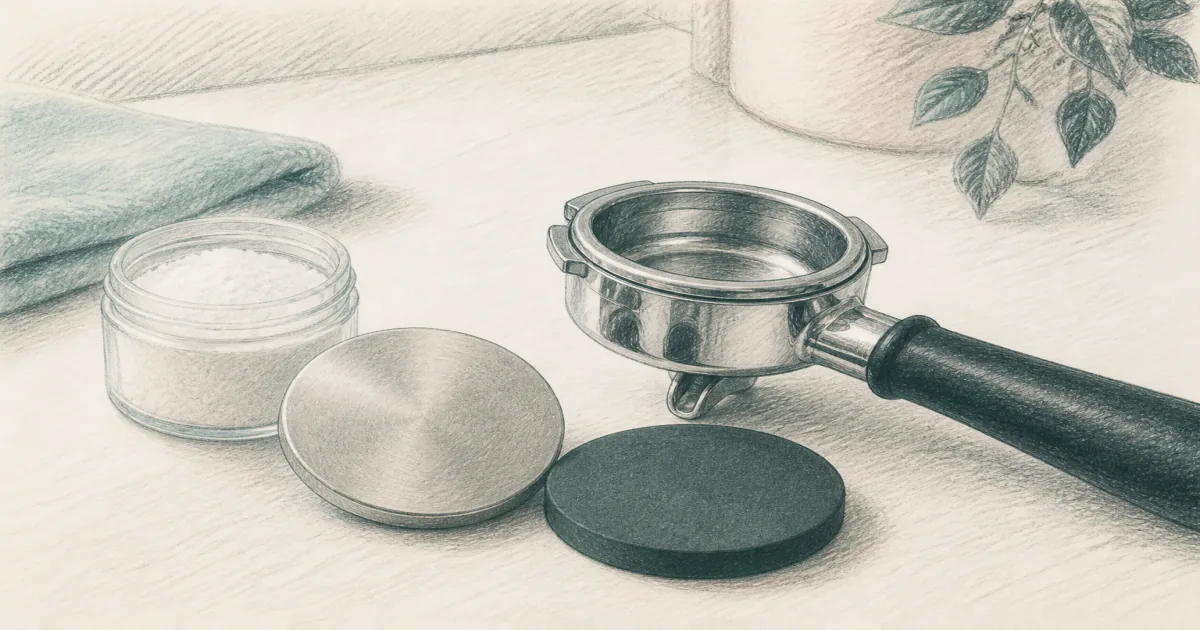
Best Espresso Backflush Disk: 58mm Metal vs 54mm Silicone
Accessories
The best espresso backflush disk matches your portafilter size and seals so water reverses through the group. Buy 58mm metal or 54mm silicone, then add Cafiza for detergent days.
Our picks
A backflush disk is a blank that seals the portafilter so brew water has nowhere to go but back through the group. That reverse flush clears coffee oils from the valve path. The disk is a sizing and sealing purchase. The cleaning steps live in our how to backflush guide.
Browse the espresso accessory guides for related tools, or start with espresso accessories worth buying if you are still building the kit.
Size and material before brand
Wrong size will not lock in cleanly. A 58mm metal blank in a 54mm portafilter is a non-starter. A 54mm silicone disc will rattle in a commercial 58mm basket.
If your manual says the machine cannot be backflushed, do not invent a disk workaround. Use the maker’s tablet or brew-unit instructions instead.
Top pick for 58mm: Espresso Supply metal insert
The Espresso Supply 58mm Backflush Insert is the best espresso backflush disk for most home bars on a true 58mm portafilter. The solid metal blank seats like a basket, seals for pressure, and holds a small dose of powder or a tablet.
Use it for water-only rinses after busy milk days and for detergent cycles on a schedule. Pair it with a group head brush so you are not scrubbing oils with only chemistry.
Skip this size on Breville 54mm machines. Buy the silicone disc that matches that portafilter.
Check price: Espresso Supply 58mm backflush insert on Amazon
Best for Breville 54mm: USEAMIE silicone disc
The USEAMIE 54mm Silicone Backflush Disc is the pick for Barista Express, Pro, Touch, and similar 8-series machines. It is a solid disc without a center hole, which matches how many modern Breville cleaning cycles rely on internal reflux.
Drop it into the portafilter, add a cleaning tablet or a measured powder dose if your routine calls for it, then run the machine’s clean cycle. Keep a spare if the original rubber disc went missing with the accessory tray.
Skip it on a 58mm Gaggia or Silvia. The diameter will not seal.
Check price: USEAMIE 54mm backflush disc on Amazon
Detergent partner: Urnex Cafiza
The disk seals. Urnex Cafiza dissolves coffee oils during detergent backflush and parts soaks. It is not descaler. Use it when your machine allows detergent in the group, then run enough plain-water cycles that the next shot does not taste like cleaner.
If your Breville kit uses branded tablets, those are fine for that machine’s guided cycle. Cafiza is the flexible powder for traditional three-way-valve backflush and soaking metal parts.
Check price: Urnex Cafiza on Amazon
How often to use the disk
Water-only cycles can follow heavy milk-drink mornings if your machine allows backflushing. Detergent cycles are often weekly for daily drinkers, or every few weeks for lighter use. Your manual wins when it gives a schedule.
Write the detergent day on a calendar next to bean shopping. Out of sight cleaners become annual emergencies, and that is when people blame the machine instead of the oil film.
If you travel for a week, run a detergent cycle before you leave, empty the drip tray, and leave the group clean. Coming home to a sour gasket is how espresso habits die.
Quick buy checklist
- Confirm your machine supports backflushing.
- Measure 58mm vs 54mm.
- Buy the matching disk.
- Add detergent your manual allows.
- Follow the step-by-step in how to backflush an espresso machine.
- Brush the gasket before and after so loose grounds do not stay behind.
A disk will not fix scale in the boiler. That is a separate descaling job covered in how to clean an espresso machine.
Signs you bought the wrong disk
If the portafilter will not lock, or water sprays around the ears, the diameter is wrong. Stop. Do not force a 58mm blank into a 54mm handle.
If the pump strains and nothing exits the valve path, your machine may not support classic backflush, or you may need a dedicated clean mode. Read the manual before you invent a longer pump run.
If detergent taste lingers, you under-rinsed. Run more water-only cycles with the blank installed, wipe the group, and discard another shot.
Pair the disk with a brush
A blind disk cleans the path you cannot see. A coffee brush clears the gasket and screen you can reach. Use both. Brushing before detergent keeps chunks of puck from sitting in the cleaner bath.
On Breville machines with a guided clean cycle, follow the prompts and keep the matching 54mm disc in the accessory drawer so you are not hunting for it when the light blinks.
Who should skip a backflush disk
Skip it if your machine is a super-automatic with a brew unit and tablet path, or if the manual forbids blind-basket backflush. Skip cheap mystery blanks that do not state a diameter.
Also skip buying three disks before you own a brush and a detergent you trust. One correct blank plus a schedule beats a drawer of unused silicone.
When you want the wider kit view, return to espresso accessories or browse more coffee guides on the blog.
Frequently Asked Questions
What is an espresso backflush disk?
A backflush disk (blind basket or blank) is a solid insert that seals the portafilter so water cannot exit through the basket. Pressure reverses through the group head and three-way valve to flush coffee oils.
What size backflush disk do I need?
Match the portafilter. Most prosumer machines use a 58mm metal insert. Many Breville home machines use a 54mm silicone disc. Measure the basket, not the marketing name.
Can every espresso machine use a backflush disk?
No. You need a three-way solenoid valve and a portafilter that accepts a blind. Many super-automatics use tablet cycles instead. Follow the manual.
Is a metal disk better than silicone?
Metal is the usual choice for 58mm commercial-style portafilters. Silicone discs are common for 54mm Breville cleaning routines. Buy the material that matches your size and machine guidance.
Do I need Cafiza with the disk?
Water-only rinses help after heavy days. Detergent backflush with Cafiza (or your maker’s tablets) is for coffee oils. Descaler is a different chemistry for minerals.
Where is the step-by-step method?
Use this page to buy the right disk. For the full cycle, see how to backflush an espresso machine.