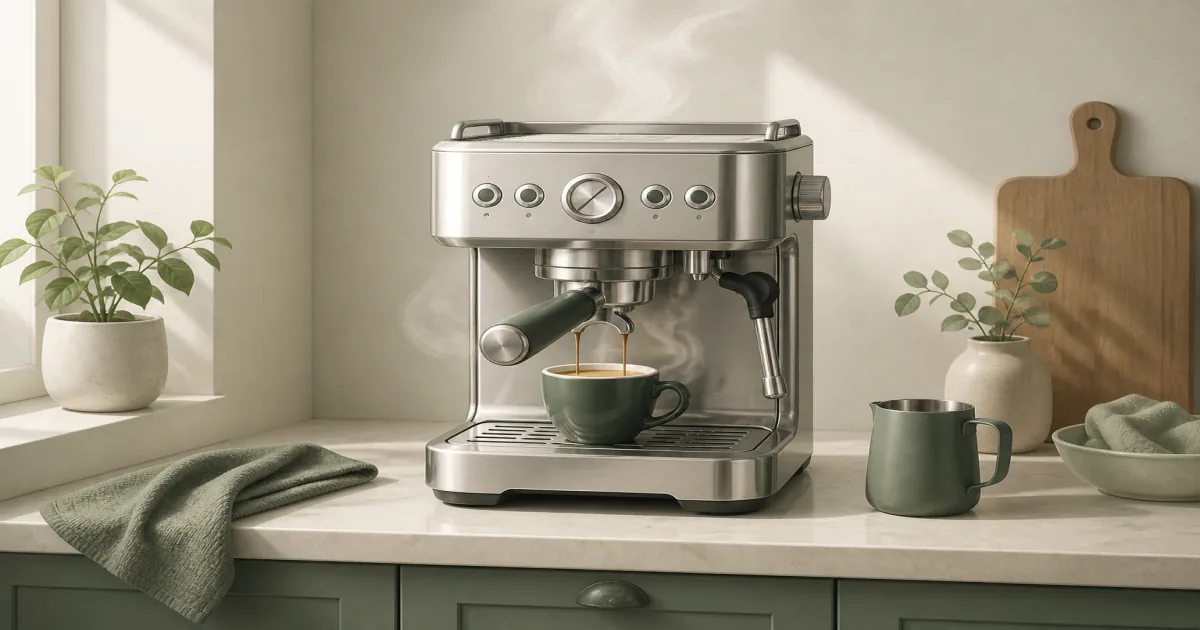
Gaggia Classic Pro (2026): Who Should Buy It, and Who Should Skip It
Espresso machines
The Gaggia Classic Pro still suits hands-on buyers who want a repairable 58mm machine. It is a poor fit if you want fast milk drinks or the easiest first month.
Our picks
The gaggia classic pro search is usually not casual. People land here because they want a machine with a real portafilter, a stronger long-term parts path, and fewer "starter machine" compromises. That instinct is good. The Gaggia Classic Pro still makes sense. It is just not the right machine for every home.
If you are comparing wider budget lanes, start with best espresso machine under 1000 and best espresso machine for beginners. Those pages cover the bigger category. This one is for the buyer wondering whether the Gaggia Classic Pro is the right kind of hard.
You can weigh it against other 58mm machines in the espresso machine guides.
Is the Gaggia Classic Pro still worth buying in 2026?
Yes, for the right buyer. It is a repairable, small 58mm machine with a brass boiler, and it costs about 21 cents a drink on the machine side over three years. It is still the honest pick for people who want to learn on standard gear.
The draw is not mystery. It is the 58mm workflow, the stronger service story, and the fact that this machine still feels like something you grow into instead of grow out of right away.
That matters if you already know the hobby will stick. A Gaggia Classic Pro can take better baskets, tampers, and routine upgrades without feeling silly. The machine asks more of you, but it also gives you a more standard espresso path than a lot of compact entry machines.
What did the E24 change?
The E24 (RI9380/46) is the current model. It swaps the older Classic's aluminum boiler for a lead-free brass boiler and a solid brass group head, which steadies brew temperature and cuts the temperature surfing.
What the brass boiler changes on your counter
The brass boiler holds a small, steady pool of water, about 3.5 oz, and the brass group head adds thermal mass right above the puck. In practice that narrows the brew-temperature swing, so a routine flush is enough to keep shots from running sour. It is not the same as a PID, and the machine still shares one boiler between brew and steam.
Why there is no PID
Gaggia kept this machine simple on purpose. There is no PID, so you control temperature by timing your flush and your habit. Buyers who want set-and-forget temperature control are happier with a different machine. Buyers who want to feel the machine respond to what they do tend to like the E24 for the same reason.
What the tank and boiler actually hold
The reservoir is 2.1 L, about 71 fl oz, which is more than most compact machines. The pump is a 15-bar unit regulated to 9 bar at the group, so the number you care about is the 9, not the 15. Gaggia publishes a service manual and parts diagram, so gaskets, valves, and the group are orderable rather than disposable.
Gaggia Classic Pro: what it is like to own
The Gaggia RI9380/46 E24 is the machine you buy because you like what it demands. It lists at $449, holds a 4.3 rating from 3,205 ratings, and stands 14.2 inches tall with a 58mm stainless portafilter, a commercial three-way solenoid valve, and a two-hole steam wand. It is a machine you settle into rather than replace.
The other appeal is long ownership. Plenty of starter machines are fine until the moment a small part fails or the platform feels closed off. Gaggia owners usually choose this machine because they want a better chance of repairing and keeping what they bought.
Who it is for: Buyers who already own or plan to buy a serious espresso grinder and enjoy learning by repetition.
Shop: Gaggia E24 on Amazon
Easier morning pick: Breville Bambino Plus
The Breville Bambino Plus is easier to live with for many homes. It heats faster, helps with milk, and gets you to a latte with less friction. The beginner machine guide explains why that matters so much in month one.
If the whole point of shopping is to avoid a separate grinder purchase, this is still not your machine, because it needs a real espresso grinder. It is the easier machine to repeat on a Tuesday, nothing more.
Who it is for: Weekday latte households that want speed and less technique.
Shop: Breville Bambino Plus on Amazon
One-box pick: Breville Barista Express
The Barista Express is the easier purchase because it includes the grinder. That is the biggest advantage, and it is a real one. It lists at $699.95 with a 4.4 rating from 27,932 ratings, and it is the machine most first-time buyers finish the year with.
The built-in mill becomes the limit earlier than a dedicated espresso burr, and the chassis is less repair-friendly long term than the Gaggia. You trade upgrade freedom for a single order and one footprint.
Who it is for: Buyers who want one box, one decision, and no separate grinder shopping.
Shop: Breville Barista Express on Amazon
How do the three compare?
The Gaggia Classic Pro is the stronger long-term buy, with the 58mm accessory path. It feels more like a machine you can settle into. The Bambino Plus is faster, easier with milk, and friendlier in the first month. The Barista Express is the pick when the grinder has to come in the same box.
If you pull one or two milk drinks before work and want less drama, take the Bambino Plus. If you care more about the feel of the workflow and want to learn with a more standard portafilter format, take the Gaggia.
What does it cost to run?
The machine is about 21 cents a drink at $449 spread over three years of two drinks a day, and the beans and grinder cost more than the machine over the same window.
That is why the grinder and the beans decide most of the yearly spend. The Gaggia is the part that makes the daily loop pleasant, and the loop is what keeps the machine in use.
Who should skip it?
Skip the Gaggia Classic Pro if you want a fast, quiet morning with one button. The Gaggia asks you to learn the flush, wait on the boiler, and buy a real grinder before the first good shot.
If the whole point of shopping is to avoid a separate grinder purchase, the Barista Express is the better answer. One box, fewer decisions, less chance that your setup stalls because you are still waiting to choose a grinder.
The Gaggia only wins when the added patience is part of the appeal.
What else do you need to budget?
The machine is not the whole cart. You still need a grinder that can handle espresso, a scale, basic cleaning supplies, and a water plan that does not invite scale. That is true for every machine. It matters more here because the Gaggia makes weak prep decisions obvious.
Do not burn the budget on decorative extras first. Put the money into the espresso grinder and the boring maintenance pieces, and add a 58mm tamper since the stock one is plastic. They move the cup more than shiny tools do.
What grinder does the Gaggia need?
One that can hold a fine, even espresso setting without drifting shot to shot. A hand grinder can work if you accept the effort, but a stepless espresso burr removes one variable while you learn the flush and the dose. See best burr grinder for espresso.
Before you order
Measure your counter. Be honest about how often you steam milk. Decide whether you actually want the 58mm workflow or you just like the idea of it. Read the machine as a long-term tool, not as a shortcut.
If that still sounds good, the Gaggia Classic Pro is easy to defend. If it sounds like homework, buy the machine that fits your real mornings instead.
Bottom line
The Gaggia Classic Pro is still a smart buy for buyers who want a repairable 58mm home machine and already accept the slower, more hands-on routine. It is the wrong machine for people who want the easiest path to weekday lattes. Buy it because you want the workflow, not because you hope the workflow will feel easier than it is.
For broader comparison, keep reading best espresso machine, best espresso machine under 1000, the Rancilio Silvia guide, or the full Baristapicks blog. The homepage has the rest of the site map.
Frequently Asked Questions
Is the Gaggia Classic Pro still worth it in 2026?
Yes, if you want a hands-on 58mm home machine with a solid repair path. It is still a good buy for people who care about learning technique.
Which Gaggia Classic should I avoid?
Avoid any older Classic with an aluminum boiler if you can stretch to the E24, which uses a lead-free brass boiler and a brass group head. Also skip used listings with a leaking group or a worn pump.
What did the E24 change?
The E24 (RI9380/46) swaps in a lead-free brass boiler and a solid brass group head. That holds brew temperature steadier than the older aluminum Classic, so you temperature-surf less.
Who should skip the Gaggia Classic Pro?
Skip it if you want fast warm-up, easy milk drinks, or the least fussy first month. Those buyers usually do better with a Bambino Plus or a one-box combo.
Why do people care about 58mm on the Gaggia Classic Pro?
Because 58mm baskets and tools give you a wider accessory path and a more standard espresso workflow than many compact starter machines.
Is the Gaggia Classic Pro better than the Bambino Plus?
It is better only if you want the 58mm path and do not mind slower mornings. The Bambino Plus is easier for milk drinks and first-home convenience.
Do I need a separate grinder for the Gaggia Classic Pro?
Yes. The machine makes more sense when you already plan to buy a real espresso-capable grinder.
Can the Gaggia Classic Pro make lattes well?
Yes, but not as quickly as a fast thermoblock machine. It is fine for patient milk-drink buyers, not for people who want the shortest weekday routine.
What is the main risk of buying the Gaggia Classic Pro?
The biggest risk is buying it for the idea of learning while secretly wanting a faster and simpler morning machine.