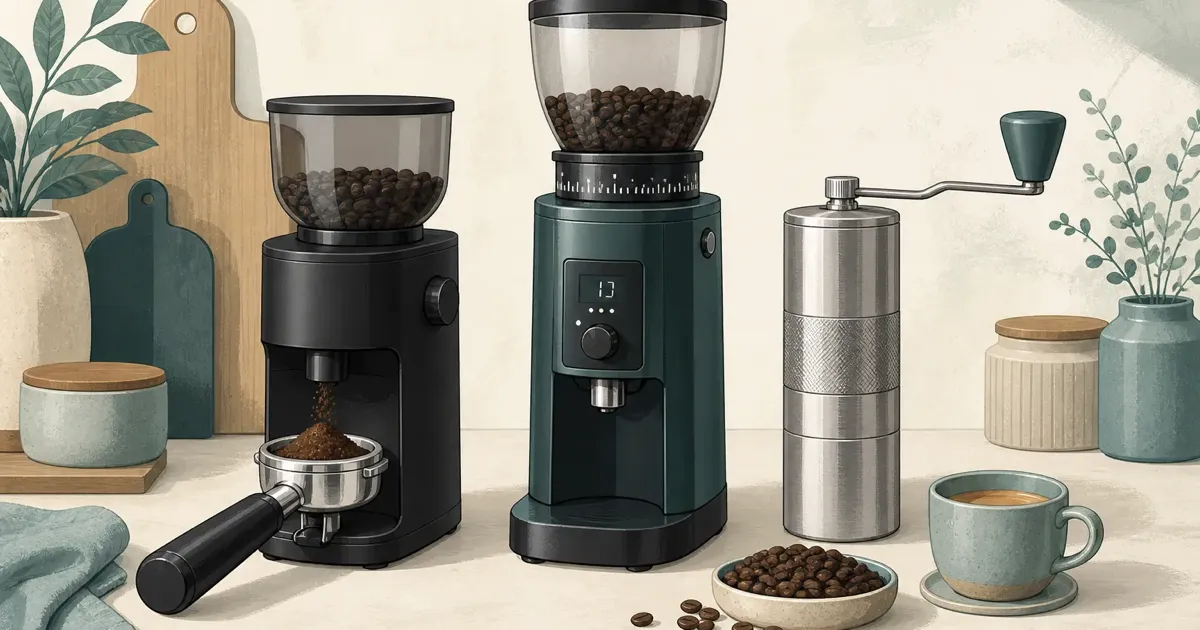
Best Espresso Grinder Under $500 (2026): Encore ESP, Sette, Hand
Grinders
Under $500, buy an espresso grinder that can make small, repeatable changes. These three picks split on first electric, faster dial-in, and quiet hand grinding.
Our picks
The best espresso grinder under $500 for most first home setups is the Baratza Encore ESP. Searching for one usually means you already bought a machine, or you are about to. The grinder is where weekday shots become repeatable. Spend this budget on adjustment you will actually use, not on a bigger number that does not fix your mornings.
Browse more options in our espresso grinder guides, or start with the best coffee grinder pillar if you are still matching brew method to mill type. This page stays under $500 and names three winners you can actually buy.
An espresso grinder under $500 should solve a real problem. It needs to grind fine enough, make small enough changes, and fit the way you make coffee. You do not need a prosumer mill to pull a good shot at home.
Start with what is annoying now. If shots jump from choking to gushing, you need smaller adjustment steps. If old coffee lands in every new dose, retention matters. If you wake a roommate, a hand grinder may matter more than a larger burr.
Adjustment, noise, and leftover coffee
Burr size is easy to compare because it is a single number. It is not the whole purchase. For home espresso, the useful question is whether you can nudge a shot a few seconds faster or slower without changing the dose.
A hopper makes sense if you buy one espresso blend and use it all week. A single-dose or hand grinder makes more sense if you switch beans, keep decaf around, or want a quiet counter. Timed dosing helps if you pull the same double every morning and do not want to weigh every time.
Do not overlook cleaning. Stale grounds make a fresh bag taste muddy, especially if you switch between decaf and regular. A quick brush and regular burr cleaning matter more than chasing a specification sheet.
The three picks at a glance
Shop: Baratza Encore ESP · Baratza Sette 270 · Timemore C3 ESP Pro
Best overall: Baratza Encore ESP
The Baratza Encore ESP is the easy first recommendation because it gives you a dedicated espresso range without making filter coffee an afterthought. Settings 1 through 20 are the fine, espresso-focused range. The coarser half works for pour-over, drip, and French press.
That split is useful when you are still learning what kind of coffee routine you actually want. The Encore ESP also has a portafilter cradle, a front pulse button, and a burr that comes out without taking the whole grinder apart. None of that is glamorous. It makes weekday coffee easier.
It retains more coffee than a true single-dose mill. If you change beans constantly, purge a little before a new shot or you will taste yesterday in today's cup. Choose it if you have a compact machine, such as one from our espresso machines under $1,000 guide, and need a grinder that will not box you into espresso forever. Skip it if retention will drive you crazy, or if you already know you want a quieter, finer prosumer step.
For a deeper Encore-focused read, see our Baratza Encore ESP guide.
Check price: Baratza Encore ESP on Amazon
Best for faster espresso dialing in: Baratza Sette 270
The Baratza Sette 270 earns its place here for households where espresso is the main event. Its 30 macro settings and stepless micro-adjustment give you more room to nudge a shot into place. The straight-through design is also fast, and its three timed-dose buttons help when you make the same drink every morning.
There is a tradeoff. The Sette 270 is louder than the Encore ESP, and it is not the better choice if most of your coffee is a large batch of drip. It is also close to the top of this budget. Buy it because the finer adjustment and timed workflow make your mornings better, not because a bigger price tag feels safer.
In an apartment, that noise is the reason some people skip it. If you grind at 6 a.m. next to a bedroom wall, the Timemore C3 ESP Pro is kinder. If espresso is the only brew and you want speed, the Sette is the one that feels like a weekday tool. More detail lives in our Baratza Sette 270 review.
Check price: Baratza Sette 270 on Amazon
Best quiet option: Timemore C3 ESP Pro
The Timemore C3 ESP Pro is the practical hand-grinder pick in this budget. Its stainless conical burr and espresso-leaning adjustment give you enough control to dial shots without a motor, a hopper, or another large appliance on the counter.
It is a strong fit for apartments, early coffee before anyone else is awake, and people who only make one or two drinks at a time. The foldable handle and compact body also travel well. The downside is obvious: you need to turn the handle. If you make four lattes before work, use an electric grinder instead.
Pairing a hand mill with a compact espresso machine can be a very good small-kitchen setup. For more counter-space advice, see our espresso machine for an apartment guide. For a longer Timemore-focused take, read Timemore C3.
Check price: Timemore C3 ESP Pro on Amazon
How to dial in after the grinder arrives
Start with a repeatable dose, such as 18 grams, and keep the output weight steady. Pull a shot, note the time, and taste it. If it runs fast and tastes sharp or sour, move a little finer. If it crawls and tastes harsh, move a little coarser.
Change one thing at a time. Do not change the dose, temperature, tamp, and grind setting together. A simple espresso scale helps because it gives you a clear record of what changed.
Fresh beans matter too. Even a good grinder cannot fix coffee that has been sitting open on the counter for months. Keep beans sealed, clean the burr chamber, and give each setting change a fair shot before you move again.
What about under $400?
If $500 is more than you want to spend, the hand mill is the smart move. A $99 Timemore C3 ESP Pro has fine enough adjustment for real espresso, and it costs a quarter of an electric grinder with similar shot-to-shot control.
What you give up is speed and convenience. A double takes over a minute of cranking, so it suits one or two drinks rather than a round for guests. You also cannot grind a whole bag for drip without real effort.
An electric grinder near $400 is the middle path, usually a used or sale-priced model with a good burr set. If you go that way, buy from a seller with a return window, because grinder alignment matters and you want the option to send it back.
When to spend more than $500
Spend more when you can name the limitation you are trying to fix. Maybe you change coffees every day and want lower retention. Maybe a loud grinder does not work in your apartment. Maybe you want a more polished single-dose workflow or a different burr profile.
If you cannot name that problem yet, stay under $500. The Encore ESP, Sette 270, and C3 ESP Pro each give a home espresso setup the adjustment it needs to make good coffee. Learn your beans and your machine first. Then you will know whether a more expensive grinder would actually help.
Not sure you need the full $500 ceiling? Our affordable espresso grinder guide starts lower and names value picks before you commit to a price cap.
For a broader comparison, read our best burr grinder for espresso guide or step up to espresso grinders under $1,000. You can also browse the Baristapicks blog for the rest of a simple home setup.
Frequently Asked Questions
Is $500 enough for a good espresso grinder?
Yes. This budget buys an electric grinder with espresso-capable adjustment, or a capable hand mill. Spend more only if you need lower retention, quieter electric grinding, or a more refined single-dose workflow.
Should I buy the Baratza Encore ESP or Sette 270?
Choose the Encore ESP if you also brew filter coffee and want a simpler first grinder. Choose the Sette 270 if espresso is the priority and timed doses plus finer adjustment are worth the extra cost and noise.
Can a hand grinder make real espresso?
Yes. A good hand mill has fine enough adjustment for espresso and can produce excellent results. It is best for one or two drinks at a time, not a round of cappuccinos for guests.
Does a grinder matter more than an espresso machine?
Often, yes. A machine can only work with the grounds it receives. An adjustable burr grinder gives you more control over shot time and taste than most machine upgrades.
How do I know when to adjust the grind?
Keep the dose and output steady, then taste. A fast, sour shot usually needs a slightly finer grind. A very slow, harsh shot usually needs a slightly coarser grind.
Will the Sette 270 wake an apartment?
It is louder than the Encore ESP. If you grind at 6 a.m. next to a thin wall, the Timemore C3 ESP Pro is the quieter morning. Grind the night before if you need electric speed and a sleeping household.
When should I spend more than $500?
When you can name the limit you hit: retention when you change beans daily, steps that feel too coarse for light roasts, or noise you cannot live with. Our budget vs prosumer coffee grinder guide walks that step-up decision.
What is the best espresso grinder under $400?
The Timemore C3 ESP Pro is the strongest sub-$400 pick in this guide if you are happy to hand grind, and the Baratza Encore ESP often sits near the top of the band on sale. Below that, put the money into a better machine and upgrade the grinder when you can name what you are missing.
What grind setting should I start with on the Encore ESP?
Baratza suggests setting 15 with an 18 g medium-roast dose as a starting point. Every machine and bean differs, so treat that as a beginning, then move a step at a time until the shot runs in the 25 to 35 second range and tastes balanced.