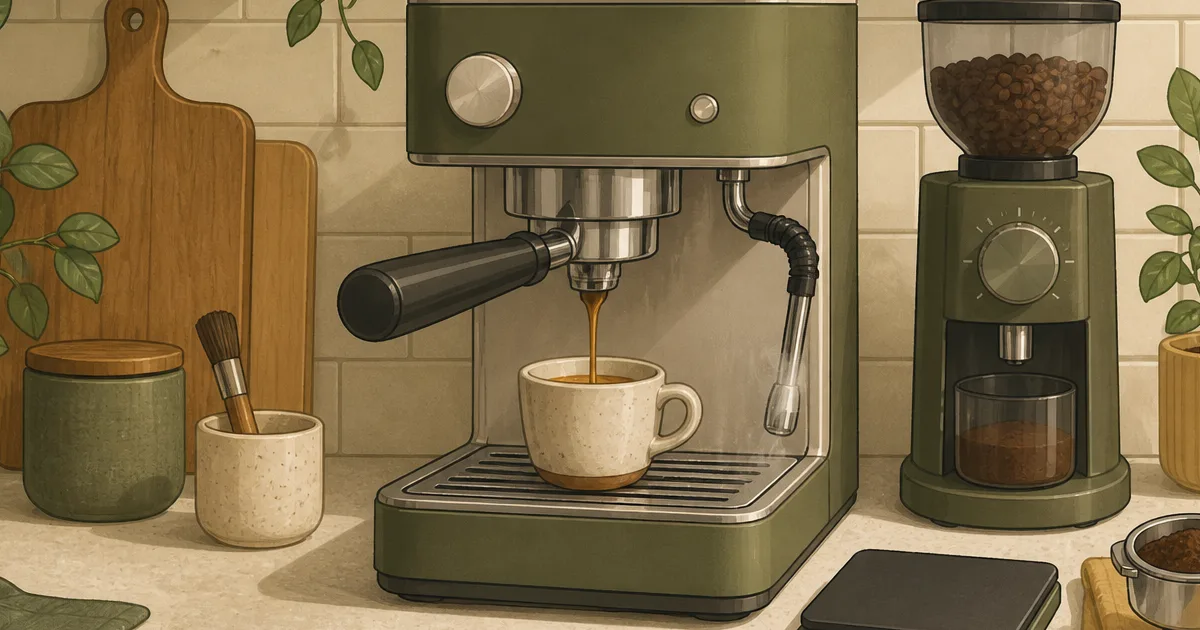
How to Make Espresso at Home: A Practical First Routine
Espresso machines
Good home espresso starts with fresh coffee, an espresso-capable grinder, and a repeatable dose. Keep the first routine simple and change one thing at a time.
Our picks
Making espresso at home is less mysterious than it looks. The machine adds hot water under pressure. Your job is to give that water an even puck of fresh, correctly ground coffee. Most frustrating shots come from changing five things at once, then not knowing which one made the difference. A Flair espresso maker uses a lever instead of a pump, but the same grind, dose, and taste loop still applies.
This is a first routine, not a promise that every coffee will taste like a cafe's best shot. If you are choosing equipment, read our best espresso machine guide. Once the basic routine is working, our dial-in guide helps you make smaller adjustments with more confidence.
If the routine has you shopping next, the espresso machine guides are the place to start.
What do you need to make espresso at home?
Four things carry almost all the quality: fresh coffee, an espresso-capable grinder, a scale, and an even tamp. Everything else is a helper.
The four things that matter most
Buy beans you can finish within a few weeks and keep them sealed away from heat and sunlight. Espresso uses a fine grind, and the grinder matters as much as the machine. Pre-ground coffee can work in a pressurized basket, but it rarely has the freshness or fine control for a standard basket.
Use a small scale. Measuring by scoop is close enough for drip some days, but espresso is sensitive to a gram or two. A scale tells you what went into the basket and what came out in the cup.
Do I need a burr grinder?
Yes, if you use a non-pressurized basket. Espresso needs a fine, consistent grind that most blade grinders and pre-ground coffee cannot deliver. A pressurized basket hides grind mistakes, which is helpful on day one but slows your learning.
What is a good starting recipe?
Start at 18 grams in and about 36 grams out in roughly 25 to 35 seconds. That 1:2 ratio is a starting point, not a rule. Taste decides.
How do I dose and tamp?
Put a dry portafilter on the scale and tare it. Add the dose, then wipe loose grounds from the rim so the gasket can seal cleanly. Break up obvious clumps, level the grounds, and press the tamper flat until the puck feels firm. You do not need to lean your whole body into it.
Why does my shot run too fast?
The grind is probably too coarse, the dose may be low, or the puck was not prepared evenly. Try a small grind adjustment first. If it barely drips and tastes harsh, go a little coarser. Purge a small amount of coffee after a big setting change so old grounds do not confuse the next shot.
How do you dial in the grind?
Keep the dose and target output steady while you learn. Change only the grind size, then taste. That is the whole loop, and it is why a grinder with a fine espresso range matters more than a fancy machine feature.
Change one thing at a time
Do not chase crema color, internet advice, and a new dose all at once. Taste the shot with a sip of water nearby. A good adjustment should make the cup more balanced, not merely move the timer. Coffee changes as it ages, so last week's setting may not be perfect this week.
A small note with the coffee name, dose, output, and grinder setting makes the next morning easier. If the first few shots are rough, make a small Americano instead of pouring them out. Add hot water after pulling the shot and taste what changed on the next round.
How much does home espresso cost per shot?
Two 18-gram doubles a day is 36 grams, so a 1kg bag lasts about 27 days. At roughly $18 a bag, a year of beans runs near $240 before milk.
That lands around 33 cents a shot in beans, which is the number people forget when they only compare machine prices. Milk, cleaning tablets, and a water filter add a little more, but beans still dominate the yearly cost. Better beans move the cup more than a fancier machine at the same dose.
Field notes from our counter
The Breville Bambino Plus is a compact fit for a first semi-automatic routine because it heats quickly and has automatic milk help. It does not include a full espresso grinder, which is worth remembering before you buy any machine with a shiny feature list.
The Baratza Encore ESP Coffee Grinder is one approachable grinder partner because it has a finer adjustment range than a basic filter grinder. It also works at coarser settings for drip or pour-over. The tradeoff is that it is still an entry-level electric grinder, so you will hear it and occasionally clean retained grounds.
What about milk drinks and cleaning?
Pull the espresso first, then steam milk if you want a latte or cappuccino. Purge the steam wand before and after use, and wipe it immediately. Dried milk on a steam tip is harder to remove than people expect. Aim for milk around 60 to 65°C, which is 140 to 149°F, and stop when the pitcher is hot to the touch.
You do not need milk to enjoy espresso. A short espresso, an Americano with hot water, or coffee over ice are all reasonable ways to start.
Cleaning is the other half of a repeatable shot. Backflush weekly, descale on the schedule your manual gives, and change the tank filter every 90 days or 10.6 gallons on filter-equipped machines. Those habits protect the machine and keep the taste steady.
Bottom line
To make espresso at home, use fresh beans, an espresso-capable grinder, a scale, and a stable recipe. Begin with an 18-gram dose and about 36 grams out, then adjust grind size in small steps based on taste. Keep the dose steady, change one thing at a time, and the morning stops being a coin flip.
More home-coffee guides are on the Baristapicks blog, and the homepage can help you compare your next piece of gear.
Frequently Asked Questions
What do I need to make espresso at home?
You need an espresso machine, fresh coffee, an espresso-capable grinder, a portafilter basket, and a small scale.
How much coffee should I use for a double espresso?
Many home baskets start around 18 grams, but use the dose range marked for your basket.
How long should an espresso shot take?
A useful first target is about 25 to 35 seconds. Taste matters more than treating that range as a law.
Why does my espresso run too fast?
The grind is probably too coarse, the dose may be low, or the puck was not prepared evenly. Try a small grind adjustment first.
Do I need a grinder for espresso?
Yes, if you use a non-pressurized basket. Espresso needs a fine, consistent grind that most pre-ground coffee cannot match.
Can I make espresso without a milk steamer?
Yes. Espresso is the coffee shot itself. Milk is optional and can be frothed separately if you want a latte-style drink.