How to Make Cold Brew Coffee: Ratio, Time, and Fixes (2026)
Brew
How to make cold brew coffee with a 1:8 ratio of coarse grounds to cold water, a 12 to 16 hour fridge steep, and a gentle filter. A Takeya pitcher and a coarse-capable grinder make it repeatable.
Our picks
Cold brew is one of the least fussy ways to make iced coffee at home. You combine grounds and water, let time do the work, then strain before the pitcher takes over the fridge. The hard parts are batch size and grind, not the recipe.
This guide is for ready-to-drink cold brew, not a super-strong concentrate. If you want pitcher comparisons, see our cold brew coffee maker guide. If you want the classic concentrate tower, see Toddy cold brew. Browse the brew guides for more non-espresso methods, or start with the pour-over coffee maker pillar if you want a hot cup too.
Can you use regular coffee for cold brew?
Yes. You do not need special beans or a special roast. Any coffee works, as long as you grind it coarse and use enough of it.
You also do not need a dedicated cold brew maker. A jar and a fine strainer get the job done. The pitcher and the grinder in this guide just make the routine cleaner and more repeatable.
One thing to know about regular supermarket coffee: pre-ground bags are almost always too fine for cold brew. They are ground for drip machines, so they slip through a mesh filter and leave a muddy cup. If you only have pre-ground, line your strainer with a paper filter and accept a softer brew.
Start with a sensible first ratio
Use 60 grams of coarse coffee to 480 grams of water. That is roughly a 1:8 ratio and makes cold brew you can pour over ice without much math. If you do not own a scale, use about 3/4 cup of coarse grounds for 2 cups of water. A scale is easier to repeat, but a measuring cup is better than never starting.
Add the grounds to a clean jar or cold brew pitcher, then slowly add water. Stir until no dry pockets float on top. Put the lid on and refrigerate it.
Do not use a tiny espresso grind. Fine particles slip through most filters, create sludge, and pull bitter flavors during a long steep. A coarse French press-like grind is the safe place to begin. The Baratza Encore Coffee Grinder is a practical electric option when you want a repeatable coarse setting. For grinders across brew methods, see our coffee grinder guide. For press-style coarse settings, see best coffee grinder for French press.
Shop: Takeya cold brew pitcher · Baratza Encore
Steep for 12 to 16 hours
Set a reminder. At 12 hours, cold brew is usually smooth and light. At 16 hours, it has more body and can stand up to ice and milk. Taste a spoonful before filtering if you want to decide on another few hours.
Leaving it for a full day is not a shortcut to stronger coffee. It often tastes woody or flat. If you want more punch next time, use a little more coffee or make concentrate on purpose. Do not keep extending the clock until the batch tastes tired.
Cold brewing in the refrigerator is the simplest routine because the temperature stays steady. Room-temperature brewing works too, but it moves faster and needs more attention in a warm kitchen. For a first batch, use the fridge.
Filter without squeezing the grounds
When the steep is done, lift out the filter basket or pour the mixture through a fine sieve. For a cleaner cup, line the sieve with a paper coffee filter. That extra minute removes the dust that makes the last sip gritty.
Let gravity drain the grounds. Do not press them hard. The last muddy liquid is usually where bitterness and fines hide.
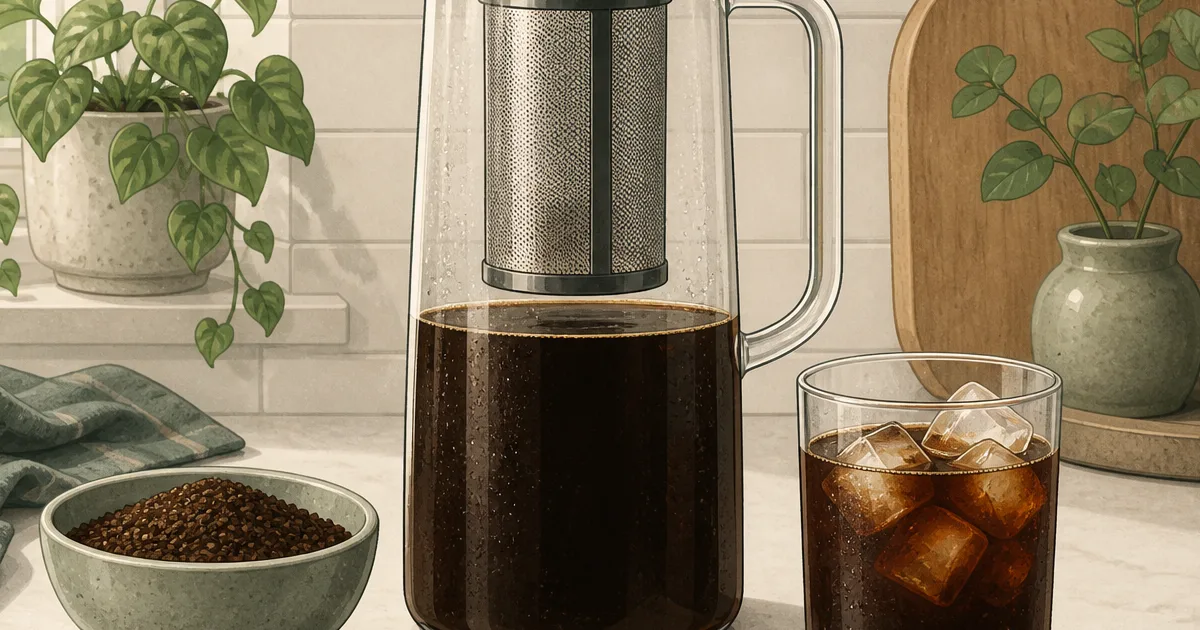
The Takeya Deluxe Cold Brew Coffee Maker, 1 Quart makes this step easy because its long mesh filter lifts out of the pitcher. It fits someone who wants cold brew in the refrigerator without a pile of separate tools.
Check price: Takeya cold brew pitcher on Amazon
Serve it the way you actually drink coffee
Pour the filtered coffee over ice. Taste it before adding anything. If it is stronger than you want, add a splash of cold water. If it tastes thin after ice melts, use a little more coffee in the next batch.
Milk works well with cold brew, especially if you make a slightly stronger batch. Start with a small amount. Sweetener dissolves slowly in cold liquid, so simple syrup is easier than dry sugar.
Cold brew will not taste like hot coffee poured over ice. It is usually rounder and less sharp. If you miss bright hot-brew flavor, make iced pour-over coffee instead.
Keep the setup clean
Rinse the filter as soon as you remove it. Dried grounds stick in mesh and turn a simple routine into a sink project. Wash the pitcher between batches, especially around the lid and gasket.
Keep finished cold brew covered. Coffee picks up refrigerator smells easily. Store opened beans in a sealed container too. Our coffee storage container guide covers that job.
Make only what you will drink in four or five days. A giant batch looks efficient until it becomes a sad brown jug in the back of the fridge. A smaller batch lets you change the ratio while you learn what you like.
Common cold brew mistakes
Grinding too fine. This is the one that ruins the most batches. Fine grounds pass through the filter and leave a gritty, cloudy cup. Keep the grind coarse, like sea salt.
Steeping for a full day. Longer is not stronger. Past 16 hours the coffee often turns woody and flat. If you want more punch, use more coffee, not more time.
Squeezing the grounds. Pressing the filter to get the last drops pushes out the bitter, muddy stuff. Let gravity finish the job.
Using the wrong water. Tap water with a strong chlorine note shows up in a cold brew because nothing cooks it off. Filtered water tastes cleaner.
Making a huge batch. Cold brew fades after four or five days. A smaller batch you finish beats a big jug that goes stale.
Field notes from our counter
Bottom line
To make cold brew coffee at home, combine coarse grounds and cold water at about 1:8, steep for 12 to 16 hours, and filter gently. Start with the Takeya pitcher if you want less mess, and use a coarse-capable grinder like the Baratza Encore when you want repeatable grounds. For more brew gear, browse the Baristapicks blog or return to the homepage.
Frequently Asked Questions
How do you make cold brew coffee at home?
Combine coarse coffee and cold water, steep 12 to 16 hours in the fridge, then filter. Start near a 1:8 ratio by weight for ready-to-drink cold brew.
What is the easiest cold brew coffee ratio?
Start around 1 part coffee to 8 parts water by weight for ready-to-drink cold brew. Make it stronger if you plan to add lots of ice or milk.
How long should cold brew steep?
Start with 12 to 16 hours in the refrigerator. Longer is not automatically better and can make the batch taste dull.
Do I need a special cold brew maker?
No. A jar and a fine strainer work. A dedicated pitcher is easier to store and clean if you make it often. See our cold brew coffee maker guide if you want comparisons.
Should cold brew use hot or cold water?
Use cold or room-temperature water. Hot water makes a different style of coffee.
Can I use pre-ground coffee for cold brew?
Yes, provided it is coarse. Fine grounds leave sediment and can make the coffee taste muddy.
How long does homemade cold brew last?
Keep it covered in the refrigerator and aim to drink it within four or five days for the best flavor.
Can you use regular coffee for cold brew?
Yes. Any coffee works if you grind it coarse and use enough of it. Pre-ground supermarket coffee is usually too fine, so line your strainer with a paper filter if that is all you have.
Is cold brew less acidic than hot coffee?
It is usually smoother and less sharp, which is why people who find hot coffee harsh often prefer it. Cold water extracts less of the acids that come out with heat, so the cup tastes rounder.