Best Coffee Storage Container (2026): Keep Beans Fresh at Home
Accessories
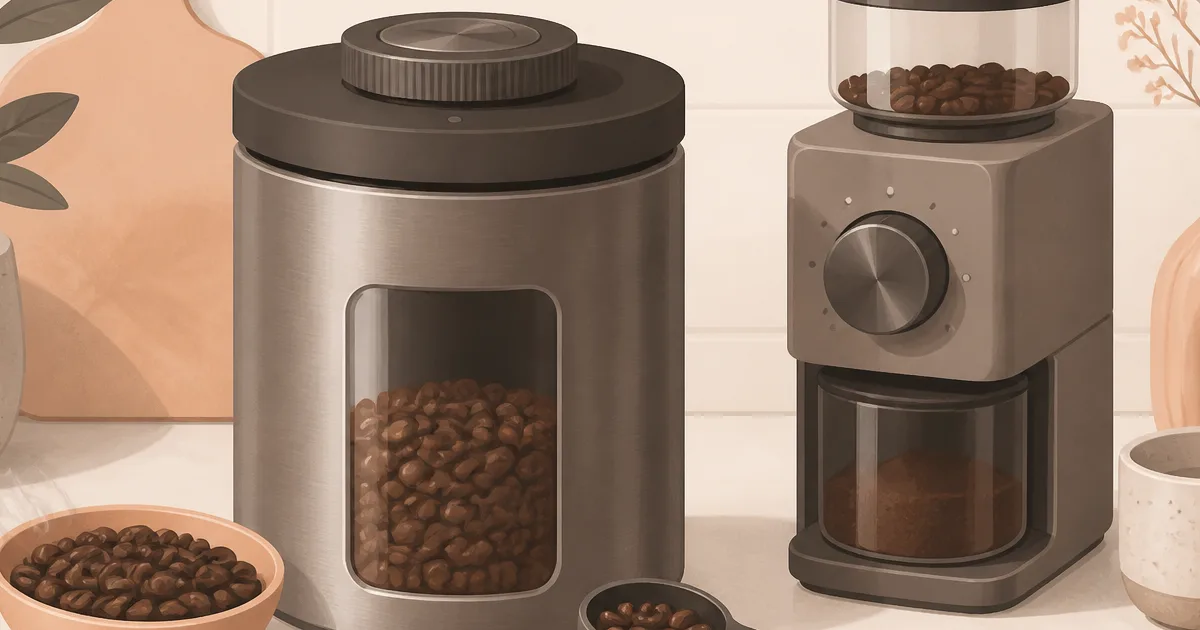
The best coffee storage container is opaque or kept out of light, seals reliably, and holds only the beans you will finish soon. A Fellow Atmos is a tidy vacuum option for opened bags.
Our picks
Coffee goes stale when air, heat, light, and time gang up on an opened bag. Storage cannot turn old beans new again. It can slow the slide after you open a bag you actually like.
Browse more kit pieces in our espresso accessory guides. Fresh beans matter more than the jar; start with best coffee beans for espresso if the bag itself is the weak link.
Choose a size you will empty
Match capacity to how fast you drink coffee. A one to two week jar is easier to keep fresh than a month-long bunker. If you buy big bags, split them into smaller sealed portions and only open one at a time.
A giant canister that sits half full for weeks is mostly leftover air. Smaller, fuller containers win.
Household math helps. If you brew about 40 grams of beans a day, a 250 to 300 gram jar is roughly a week. A 1 kilogram showpiece canister only makes sense if you refill from a sealed bulk bag and empty the jar on a schedule you actually keep. Otherwise you are storing air with a coffee perfume.
Couples who drink different coffees should use two small jars, not one shared vat. Mixing a chocolate espresso blend with a bright filter roast in the same container muddies both.
Airtight helps, but freshness starts earlier
Buy roast dates you can trust and amounts you will finish. Then put the opened coffee somewhere cool, dark, and sealed. Counter spotlights and stove heat are bad neighbors.
Valve bags are designed to vent carbon dioxide after roasting. Once the bag is open, that valve does not replace a real lid. Folding the bag and clipping it is better than nothing and worse than moving the beans into a sealed jar you will close after every scoop.
The Fellow Atmos Electric pulls the air out for you after each scoop, so you do not have to twist a lid every morning. Pick a size you will actually empty, and keep the gasket clean so the seal stays honest.
Shop: Fellow Atmos Electric on Amazon
If you will not press the button every morning, be honest before you buy. A vacuum jar you leave open is worse than a simple snap canister you actually use. Habit beats hardware.
Where to keep coffee at home
A closed pantry shelf beats a sunny windowsill. Keep the jar away from the oven, dishwasher steam, and the top of a fridge that runs warm.
If you freeze coffee, portion it, seal it tightly, and thaw sealed so condensation does not wet the beans. Do not bounce the same beans in and out of the freezer every morning.
A practical daily setup
- Buy a bag you can finish in a few weeks.
- Move beans into an opaque or dark-stored container after opening.
- Scoop what you need, then reseal right away.
- Grind for the next brew, not the next three days.
That routine beats owning three fancy lids while a half-open bag lives next to the fruit bowl.
Label the container with the roast date if the bag print is easy to lose. When flavor drops, the date tells you whether the coffee aged or your grind drifted. Most “my canister failed” stories are just a two-month-old bag that should have been finished sooner.
If you share a kitchen, put the scoop inside the jar or clip it to the lid. A scoop that lives in a utensil drawer gathers cooking smells. Coffee will pick those up.
When to skip a specialty canister
Skip vacuum gadgets if you finish bags in under a week and already keep them sealed in a dark spot. Spend that money on fresher beans or a better grinder instead.
Skip clear display jars if the coffee will sit in daylight. Looks nice. Ages faster.
Skip multi-compartment “system” kits if you only buy one coffee at a time. Extra lids become clutter. One well-sized jar you close every morning is the whole product category for most homes.
Common storage mistakes
Leaving the bag rolled and clipped on the counter looks tidy and still leaks air. Moving beans into a clear jar next to the window looks stylish and still cooks the roast with light. Filling a huge hopper and a huge canister with the same beans doubles the stale surface area. Pick one home for the opened coffee and keep the rest sealed in the original bag or a second closed container in a cool cupboard.
Washing a vacuum lid in the dishwasher can warp gaskets. Hand wash, dry, and check that the seal still grabs. A canister that no longer pulls air out is just a fancy jar.
Bottom line
The best coffee storage container is the one you close every time, keep out of light, and size to your real drinking pace. The Fellow Atmos is a tidy vacuum option when air exposure after opening is the problem you want to solve. Pair it with fresher bags and a grinder that gets used, and storage stops being a mystery upgrade.
More setup help lives on the blog. Start from the homepage when you are building the rest of the counter.
Frequently Asked Questions
Do coffee beans need a vacuum canister?
Not always. A sealed opaque jar in a cool cupboard already beats a half-open bag on a sunny counter. Vacuum helps when you open the same bag for days and want less leftover air.
Should I freeze coffee beans?
Freezing can help if you portion tightly and thaw sealed. For daily use, buy amounts you will finish in a few weeks and store them cool and dark.
Clear glass or opaque?
Opaque or tinted is safer. Light ages coffee. If you love clear glass, keep it in a closed cabinet.
How full should the container be?
Fill it closer to the top so there is less empty air. A giant half-empty jar is mostly a stale air tank.
Can I store ground coffee the same way?
Grounds go stale faster. Store whole beans when you can, and grind what you need for the next brew.
Is the Fellow Atmos worth it over a cheap jar?
Buy Atmos if you want a vacuum seal and a tidy scoop lid. A simple airtight opaque canister is enough if you finish bags quickly and keep them out of light.