Espresso Machine Water Filter: When You Need One and How to Replace It
Espresso machines
An espresso machine water filter makes sense when your machine accepts one and your water is likely to create scale or affect taste. It does not replace regular cleaning, but it can make routine care easier.
Our picks
A filter is a small maintenance habit, not an upgrade you can taste on day one. The job is simple: reduce chlorine and some minerals before they reach the boiler, so taste stays steady and scale builds more slowly. It does not replace descaling, and it will not fix bad coffee.
More care and setup topics sit in the espresso machine guides.
Does your espresso machine take a water filter?
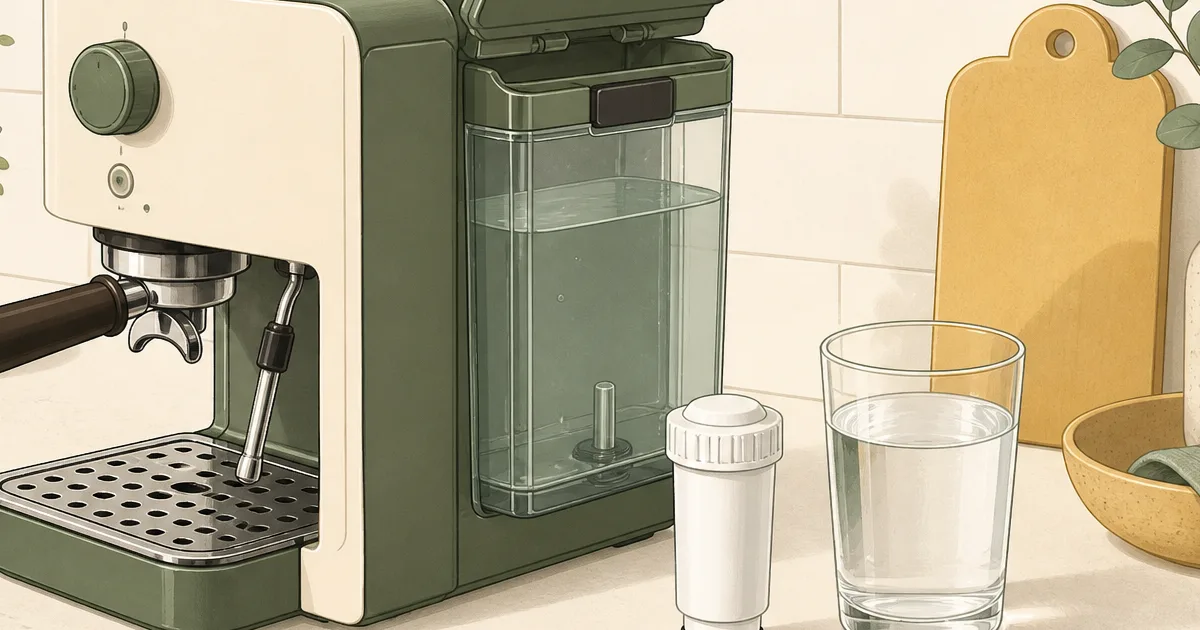
Only some machines accept a tank cartridge. Check your model before you buy anything, because the wrong cartridge will not seat and the tank will not close cleanly.
What if your machine has no cartridge slot?
Then a pitcher filter or a remineralized recipe covers the same job. A Brita or ZeroWater class pitcher handles chlorine and some hardness, and a mineral recipe lets you build water from distilled or reverse-osmosis. That second path is the one in our Third Wave Water for espresso guide.
Do not try to force a cartridge into a tank that was not built for it. The filter has to sit in the holder so water flows through the media instead of around it.
When should you replace the filter?
Breville's line is every 90 days or 10.6 gallons of water, whichever comes first. That is the manufacturer rule, and it is a good default.
How do you know the filter is spent early?
Two signals show up before the calendar does. The coffee turns flat, and the machine starts asking for a descale sooner than usual. If either happens, change the cartridge early rather than waiting out the 90 days.
Hard water is the variable. If your kettle furs up quickly, change the cartridge on that shorter schedule. If your water is soft, the full 90 days is fine.
Why a filter is not the same as descaling
A filter reduces what is in the water on the way in. Descaling removes the scale that has already formed inside the boiler and group. Those are two different jobs, and skipping one does not cover the other.
What the resin actually removes
The BWF100 uses resin media rather than a carbon block, which is why it targets scale as well as taste. It reduces chlorine and some minerals, but it is not a softener and it will not strip everything. That is a feature, since some minerals are what make coffee taste like coffee.
Run a descale on the schedule your manual gives. Our descaling guide walks through the cycle, and how to clean an espresso machine covers the weekly backflush that keeps the group clean.
What does hard water do to an espresso machine?
Hard water leaves calcium and magnesium behind as it heats, and that scale coats the boiler, the thermoblock, and the group. The first symptom is usually a slower heat-up or a machine that asks for descale more often. Left alone, scale restricts flow, which throws off the shot and can shorten the life of the heating element. A filter slows that buildup, but it cannot undo scale that is already there, which is why the two habits work together.
What does filtered water cost per year?
A 6-pack lists around $30 and covers close to a year if you change it every two months. If you follow the 90-day schedule, the same 6-pack stretches about 18 months.
That is cheap next to a descale service or a replaced boiler. A pitcher filter runs a similar yearly number, but it lives in the fridge and asks for its own cartridge changes. The tank filter wins on convenience because it is already inline with the machine.
How do you install a new filter?
Installation is a two-minute job once you know the order. Get it wrong and the cartridge will not seat, so follow these steps.
The install steps
- Soak the new cartridge as the directions say, so the media is wet before first use.
- Rinse the tank and wipe the holder so old grounds do not foul the seal.
- Seat the cartridge in the holder until it clicks into place.
- Fill the tank, then run a short flush through the group before your first shot.
- Note the date on your phone or on the tank so the next change is not a guess.
Field notes from our counter
Bottom line
Buy the Breville BWF100 if your machine takes it and you want one simple habit to protect taste and slow scale. Match the part to your exact model and batch, soak it before the first use, and change it every 90 days or 10.6 gallons, sooner on hard water.
If your machine has no cartridge slot, a pitcher filter or a mineral recipe is the honest alternative. Either way, keep descaling on its own schedule, because a filter and a descale are not the same job.
Pair it with the related guides below when you are ready to solve the next part of the routine. The best upgrade is often the one that removes a repeated annoyance, whether that is uneven grinding, a messy prep area, old beans, or a machine that needs more consistent care.
Frequently Asked Questions
Do all espresso machines use a water filter?
No. Only some machines accept a tank cartridge, so check your model first. If your machine does not take one, you can manage water with a pitcher filter or a remineralized recipe instead.
Does a water filter replace descaling?
No. A filter is not the same job as descaling. You still need to descale on schedule, because a filter does not remove the scale that has already built up.
Which Breville machines use the BWF100 filter?
The Breville BWF100 cartridge is the official tank filter for many Breville espresso machines, including the Barista Express, Barista Pro, Infuser, and Dual Boiler. Match the part to your exact model, since several Breville tanks look similar in photos.
How often should I change the filter?
Breville says every 90 days or 10.6 gallons. Owners on hard water often change nearer every 2 months or 60 tank refills, whichever comes first.
How do I install a new water filter?
Soak the cartridge before the first use, then seat it in the tank holder. The wrong cartridge will not seat in the tank.
What if my machine has no filter slot?
Use a pitcher filter or a remineralized water recipe. Both manage hardness without a cartridge in the tank.