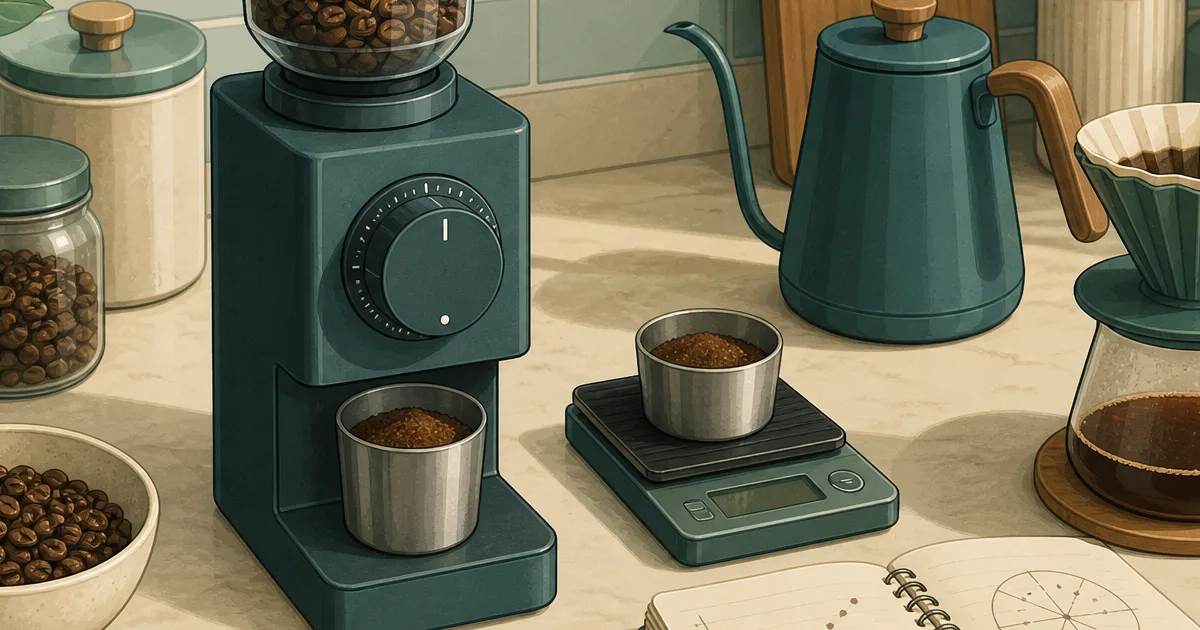
Coffee Grinder Calibration: How to Find a Repeatable Starting Point
Grinders
Calibrating a coffee grinder means finding a repeatable starting point, then making one small adjustment at a time. It is less dramatic than it sounds.
Our picks
Coffee grinder calibration sounds like a job for a repair bench. For most home brewers, it is simpler. You are not trying to make every grinder in the world agree on one magic number. You are finding a useful reference point for your grinder, your coffee, and your usual recipe.
That is different from changing an internal burr zero point. If your manual has a specific internal calibration procedure, follow it closely. The steps below cover daily calibration: using the external adjustment well enough that your coffee is repeatable instead of random.
For grinder picks that make calibration easier, browse the grinder guides.
Begin with a clean, steady setup
Start with fresh coffee you have used before. Empty old grounds from the catch cup and brush out obvious buildup if it has been a while. A dirty chute can mix yesterday's coffee into today's dose, which makes a good setting feel unreliable. Our coffee grinder cleaning guide explains the safe dry-clean routine.
Keep the dose, water, and brewer consistent while you learn. For pour-over, use the same dripper and water amount. For espresso, keep the basket, dose, and target output the same. Change one variable at a time. It is boring advice because it works.
Write down the coffee name, roast date if available, grinder setting, dose, and result. A note in your phone is enough. You do not need a fancy spreadsheet to remember that setting 14 was good with the medium roast you bought last week.
Find the direction before chasing a number
For filter coffee, a sour, thin cup usually needs a finer grind. A harsh, bitter cup that drains slowly often needs a coarser grind. Taste is the final judge, but brew time gives useful context.
For espresso, use a scale. A common starting point is 18 grams of dry coffee in and about 36 grams of espresso out in roughly 25 to 35 seconds. If it gushes out quickly and tastes sharp, move finer. If it barely drips and tastes harsh, move coarser. Then taste again.
Do not change the grind, dose, and output target at once. You may make the next shot better, but you will not know why. Our how to dial in espresso guide goes deeper once you have a stable starting setting.
Use small adjustments
Stepped grinders have numbered clicks. Move one or two clicks at a time. Stepless grinders let you make smaller moves, so use a short nudge rather than spinning the dial wildly. Espresso needs the smallest changes because a little difference in burr spacing can change shot time a lot.
The Baratza Encore ESP Coffee Grinder is a good example of why marked settings help. Its range supports espresso and filter work, and the markings give you a place to return after cleaning or swapping coffee. Taste still decides the next click. A collar number is a starting point, not a permanent answer.
If a setting is close but not perfect, do not panic. The coffee may change over a few days as it ages. Humidity can also affect how grounds flow. A note that says "15, then one click finer after day five" is more useful than insisting one dial number should work forever.
For filter brewing, use drawdown time as a rough signal, not a verdict. A familiar recipe that suddenly drains much faster can justify a finer move. If it drains normally but tastes good, leave it alone and drink your coffee.
Know when the problem is not calibration
A worn or badly seated burr can make the grind uneven no matter where you set the dial. So can oily buildup, a loose hopper, or a bag of stale beans. Clean the grinder, confirm the burr carrier is seated, and use coffee with some life left before deciding the grinder is broken.
For espresso, puck preparation matters too. A calibration routine cannot fix an uneven tamp, a basket that is overfilled, or a machine that is not warmed up. For filter coffee, check your water temperature and pouring before blaming the grinder for every flat cup.
You also may have reached the edge of your grinder's range. A filter-first grinder can make good drip coffee while still lacking the small adjustments needed for unpressurized espresso. In that case, a better setting will not appear if you keep turning the same dial. Our espresso burr grinder guide explains what to look for when the limitation is the tool.
Keep a useful reference, not a rigid rule
Once you get a cup you like, save the setting and recipe. That is your starting point for the next bag, not a commandment. A dark roast may need a different setting than a light roast. A coffee that has been open for two weeks may need a small change from day one.
The goal is a calmer morning: less guessing, fewer wasted shots, and an easier way to know what to adjust next. Calibration is simply the habit of making those small changes on purpose.
Bottom line
Coffee grinder calibration starts with a clean grinder, a steady recipe, and one small adjustment at a time. Record a good setting, taste the result, and accept that fresh coffee changes as it ages. For more grinder and espresso help, browse the Baristapicks blog or return to the homepage.
Frequently Asked Questions
What does calibrating a coffee grinder mean?
At home, it means finding and recording a repeatable setting that makes a good cup with a particular coffee and brew method.
Do all coffee grinders need calibration?
Every grinder benefits from a repeatable starting point. Internal burr calibration is different and should only be changed when the manufacturer explains the procedure.
Why did my old grinder setting stop working?
Beans age, humidity changes, and burrs settle after cleaning. The number on the dial is only a starting point.
Should I change grind size or dose first?
Change grind size first when the coffee runs too fast or too slow. Keep the dose steady so you can tell what the adjustment did.
How much should I move the grinder?
Move one small marked step for filter coffee, or a tiny adjustment for espresso. Large jumps make it hard to learn from the result.
Can calibration fix stale beans?
No. Calibration helps you use fresh beans consistently. It cannot restore coffee that has gone flat.