Chemex Coffee Maker (2026): Who It Is For, and How to Brew It
Brew
The Chemex is the right carafe when you want a clean, shareable pour-over pot. It is less convincing if you only brew one mug and hate buying thick bonded filters.
Our picks
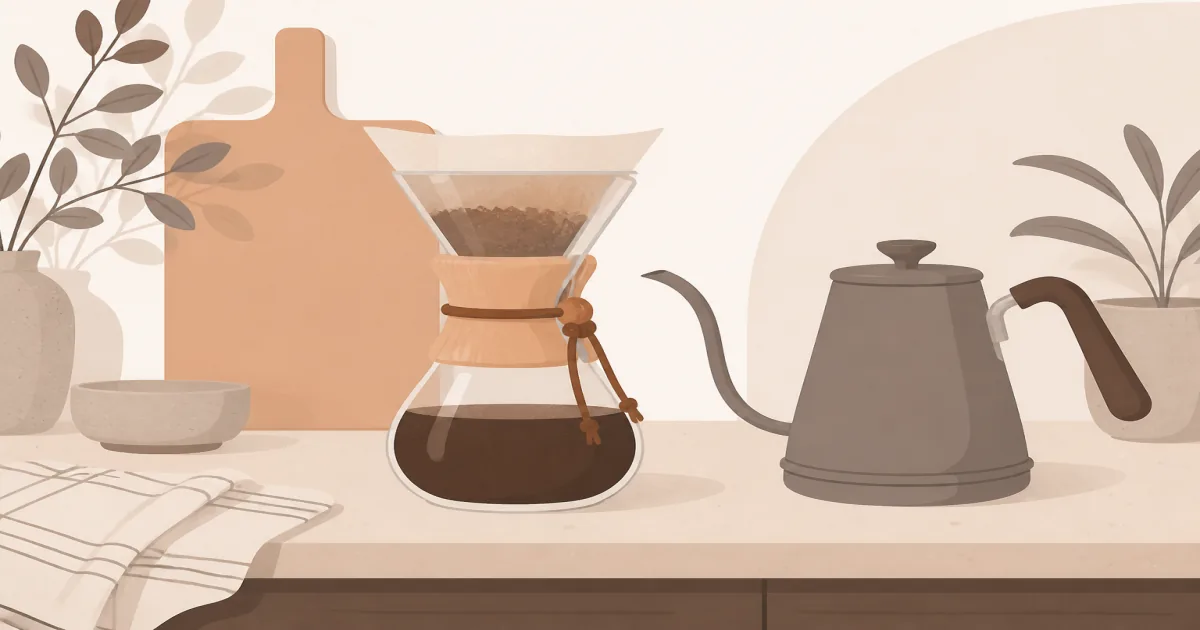
A Chemex is a hourglass glass carafe with a wood collar and a thick paper filter. Hot water pours over coffee in the filter. Gravity pulls the brew into the bottom chamber. The thick paper is the point. It strips more oils and fines than a thin cone filter, so the cup tastes cleaner and lighter.
If you want a wider dripper roundup first, use the pour over coffee maker guide. This page owns the Chemex decision itself.
For the wider world of pour-over and press brewing, browse the brew guides.
Chemex vs a simple cone dripper
The Chemex wins when the carafe is part of the job. It loses when you want the cheapest filter refill aisle and a single mug perch.
A calm first brew
Grind fresh with a burr grinder. Medium is a fair start.
- Open a Chemex filter into a cone and set it in the top.
- Rinse the paper with hot water and dump the rinse water.
- Add about 40 to 50 grams of coffee for a full-ish 8-cup pot, or scale down for a smaller batch.
- Bloom with enough water to wet the grounds. Wait 30 to 45 seconds.
- Pour in slow circles, keeping the slurry level steady.
- Stop when you hit your brew water target. Let it drain. Remove the filter.
Total brew time often lands around four to five minutes. If it finishes in two, the grind is too coarse or the dose is too low. If it crawls past six, coarsen the grind.
Why the kettle matters
A wide kitchen kettle makes Chemex harder than it needs to be. Water hits the bed in a blob, digs a crater, and leaves dry pockets. A gooseneck like the Fellow Stagg EKG gives you a thin stream you can place. Temperature control is a bonus for weekday repeats, not a personality test.
You can still brew Chemex without one. Most people who stick with Chemex eventually want the better spout.
Filters, glass care, and honest tradeoffs
Bonded Chemex filters cost more than grocery cones. That cost is part of owning the tool. Skipping them usually means a muddier cup and a worse fit in the fold.
Glass chips. Do not use the Chemex as a sink-side banging post. The wood collar should stay dry enough that it does not stay soaked between brews.
If you want heavier body and more sediment, a French press is the clearer alternative. If you want espresso, stop comparing paper filters and read the espresso machine guide.
Ratios that keep weekday cups steady
A common starting ratio is about 1:16 coffee to water by weight. For a smaller Chemex brew, 30 grams of coffee and about 480 grams of water is a calm place to begin. For a fuller 8-cup pot, many people land near 40 to 50 grams of coffee with water scaled to taste.
Write your ratio on a sticky note for the first week. Chemex feels artistic until you change three variables at once and cannot remember what worked Tuesday.
Bloom, channels, and stalled drains
If dry clumps float after the bloom, break them with a gentle swirl or a quick stir. Dry pockets taste sour. If the bed collapses into a crater on one side, slow the pour and keep the slurry more level.
A stalled drain is almost always grind or dose. Coarsen a little. Do not poke holes through the paper with a spoon. That creates channels and a thin cup with muddy edges.
Serving, holding, and second cups
The Chemex carafe is the serving vessel. Pour soon if you like a hotter cup. Leaving coffee on the grounds is not a Chemex problem the way it is with French press, because the filter already left the pot. Still, sitting on a warm stove is a bad idea for glass.
If you only need one mug most days, brew a smaller dose instead of making a full pot and reheating leftovers. Reheated Chemex is fine in a pinch. Fresh is better.
When Chemex is the wrong buy
Skip Chemex if you hate buying specialty filters, if your sink is a chip hazard, or if you only ever want one travel mug of coffee. An AeroPress or a simple cone dripper will frustrate you less.
Also skip it if you wanted espresso-style milk drinks. Chemex makes clean black coffee. It does not steam milk or build crema. Pair it with a separate frother only if you already like the Chemex cup.
Bottom line
Buy the Chemex 8-Cup when you want a clean, shareable pour-over pot with a ritual you will actually keep. Add a gooseneck when your current kettle fights the pour. Solo travelers and one-mug kitchens often do better with an AeroPress.
More brew gear lives on the blog. The homepage maps machines and grinders if your next step is espresso.
Frequently Asked Questions
Is a Chemex coffee maker worth it?
Yes, if you like a clean, tea-like clarity and you brew enough volume to fill the carafe. It is one of the most recognizable home pour-over setups for a reason.
What size Chemex should I buy?
The classic 8-cup is the default for most kitchens. It is not eight American mugs. Think a small pot for one or two people. Smaller Chemex sizes exist if you only ever brew a single cup.
Do I need Chemex bonded filters?
Yes for the classic taste. The thick filters are part of why the cup tastes so clean. Generic cone papers do not sit the same way in the Chemex fold.
Do I need a gooseneck kettle for Chemex?
It helps a lot. A slow pour keeps the bed even. You can struggle through with a regular kettle, but a gooseneck removes a lot of frustration.
Chemex vs AeroPress?
Chemex is a shared carafe pour-over. AeroPress is a fast one-mug immersion press. Choose by whether you need one pot or one personal cup.
What grind should I use?
Start medium, like sea salt. If the brew stalls, go coarser. If it races through and tastes thin, grind a little finer.
Is Chemex hard to clean?
Rinse with hot water after each brew. Occasional deeper cleans help if oils build on the glass. Avoid abrasive pads that scratch.