Best Gooseneck Kettle (2026): Fellow Stagg EKG vs Cosori
Brew
The best gooseneck kettle is a narrow-spout pourer you can control for minutes. Buy the Fellow Stagg EKG for exact temps, or a Cosori if presets are enough.
Our picks
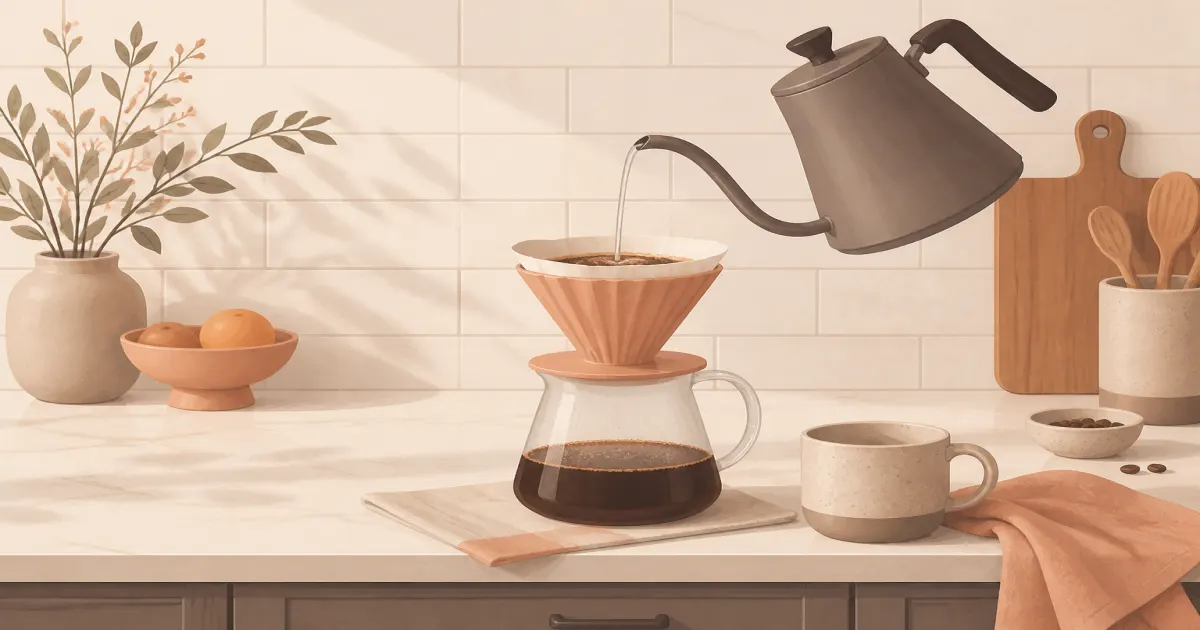
A gooseneck (swan neck) kettle has a long, curved spout. The shape slows water so you can spiral across a coffee bed instead of dumping a flood from a wide tea spout. That control is why pour over guides keep mentioning them.
Browse more filter gear in our brew guides. For dripper choices, start with the best pour over coffee maker pillar. For a deeper named take on the Stagg, see Fellow Stagg EKG.
What the spout actually changes
Wide kettles pour fast and splash. Goosenecks meter flow. You can bloom, pause, and finish without drowning one side of the bed.
Flow restrictors and valves on some models slow the stream further. Useful for beginners. Not required if you practice with a basic neck.
Balance matters. A kettle that tips too easily will surge when half empty. Look for a handle that keeps your wrist neutral.
Quick comparison
Shop: Fellow Stagg EKG Pro · COSORI gooseneck
Pick the Stagg EKG if you brew light filter coffee most mornings and care about holding 200°F while you grind. Pick the Cosori if you want an electric swan neck and five sensible presets without paying for the Fellow nameplate.
Stovetop goosenecks still make sense if you already live at the burner and do not want another cord. Boil, wait 30–45 seconds, and pour. That workflow works for a lot of coffee. Just know you lose the weekday repeatability of a hold mode.
Stovetop goosenecks
Stovetop models heat on gas, electric coils, or induction (if the base is compatible). They cost less and have fewer parts to fail.
You need a thermometer or a careful ear if you care about exact temperatures. Many people boil, wait 30–45 seconds, and pour. That works for a lot of coffee.
Watch thin painted finishes on high gas flames. Stainless bodies last. Plastic handles should stay cool enough to hold.
Buy stovetop if you already live at the stove and do not want another cord on the counter.
Electric goosenecks
Electric goosenecks heat to a setpoint and often hold temperature. That is the weekday feature: same number every morning without a separate thermometer.
Look for:
- Clear temperature controls (Fahrenheit is fine for US kitchens).
- A hold mode that does not quit after thirty seconds.
- A base that does not scream when the kettle docks crooked.
- Capacity that matches your brew size.
They cost more and use counter space. Worth it if pour over is your daily method. Optional if you brew filter coffee twice a month.
Capacity and weight
Smaller kettles are easier to pour slowly. A 1 liter class unit covers most home pour overs with water left for rinsing filters. Both picks above sit in that lane.
Giant travel-camp hybrids get heavy when full. Heavy kettles make shaky spirals. Choose the size you will lift comfortably at 6 a.m.
Do not fill past the mark. Overfilled goosenecks spit and scald.
Temperature ranges that matter
Most filter coffee sits near 195–205°F (90–96°C). Espresso machine boilers are a different world; you are not replacing a machine with a kettle.
Light roasts often taste better with careful temps and gentle pours. Dark roasts forgive boiling water more. Match the tool to the beans you actually buy.
If your electric kettle only toggles boil and “warm,” you can still brew. Precision is a convenience, not a moral requirement.
Care and safety
Descale when heating slows or the spout sputters. Vinegar or citric acid cycles work on many models; follow the maker’s notes.
Keep cords away from sink edges. Empty the kettle after breakfast if you will not brew again. Sitting water tastes flat and invites scale.
Never heat an empty electric kettle on purpose. Dry boil protection exists for a reason, and it should stay unused.
When you can skip a gooseneck
French press, moka pot, and basic drip makers do not need a swan neck. Espresso workflows need grinders and machines more than fancy kettles. See beginner espresso if that is your real goal.
If budget is tight, buy the dripper and grinder first. Upgrade the kettle once pour control is the obvious weak link.
Pour practice that actually helps
Fill the kettle with water only and practice spirals over an empty dripper in the sink. Learn how little tilt you need for a thin stream. Then brew coffee. Practicing on beans while learning the spout wastes coffee and patience.
Count a slow bloom pour out loud if it helps: two seconds center, pause, then wider circles. The goal is an even bed, not a latte-art flourish in the dripper.
If your hand shakes, rest a finger lightly on the dripper rim for stability, or use a kettle with a more restrictive spout while you learn.
Keep a towel under the dripper for the first week. You will spill. That is normal. Wipe the spout tip after brewing so mineral dots do not build into a crust that breaks the stream later.
Buying checklist
- Spout you can pour slowly for three minutes.
- Stovetop vs electric chosen for your counter and habits.
- Capacity you can lift without shaking.
- Temperature features only if you will use them.
- Easy descaling and a handle that stays holdable.
A gooseneck will not fix a chaotic grind. Get the grinder into a usable medium range first, then let the kettle polish your pour. Tools work in that order for most kitchens.
The best gooseneck kettle disappears into your pour over routine. Flow control beats owning a showpiece that stays in the box.
More brew guides live on the blog. Start at the homepage when you are building a full filter setup.
Frequently Asked Questions
Do I need a gooseneck for French press?
No. Any kettle that heats water is fine for a French press. Goosenecks shine for pour over control.
Stovetop or electric?
Stovetop is cheaper and works on gas or induction-ready models. Electric adds temperature setpoints and hold modes. Choose based on how picky you are about repeat cups.
What capacity should I buy?
0.8–1.2 liters covers most single and double pour overs. Huge kettles are heavier to pour slowly and take longer to heat.
Is variable temperature worth it?
Yes if you brew light roasts and care about 195–205°F ranges. The Fellow Stagg EKG wins that lane. If you only make dark roast press coffee, a basic boil kettle is enough.
Why is my pour sputtering?
Overfilling, a clogged spout screen, or tipping too far. Keep water below the max line and pour from a higher wrist angle with less tilt.
Can I use a gooseneck kettle for tea?
Yes. Preset electric models are handy for green and oolong ranges. Coffee buyers just need a spout they can control and a temperature they can repeat.
Is the Fellow Stagg EKG worth it over Cosori?
Buy Stagg if you want exact setpoints and a hold mode every morning. Buy Cosori if five presets cover your brew temps and you would rather spend the difference on a better grinder.