Best Cold Brew Maker (2026): Tested Picks for Smooth Morning Coffee
Brew
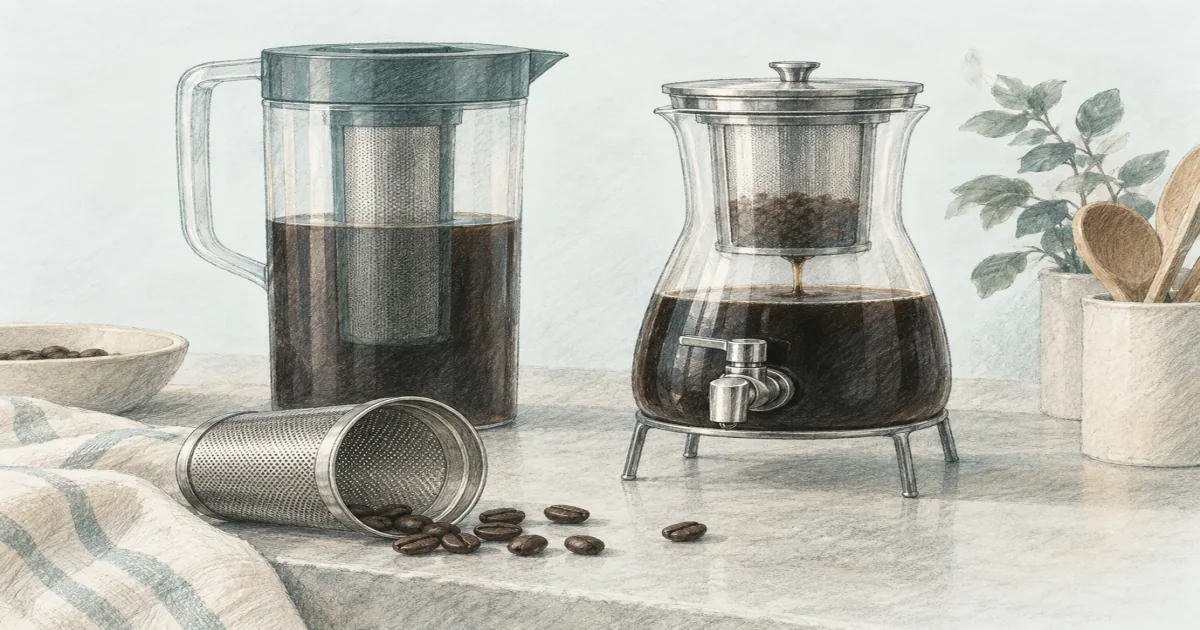
The best cold brew maker for most US kitchens is the Coffee Gator glass carafe for the fridge. Choose Maestri House for a slim leak-proof pitcher, or County Line Kitchen for a glass mason jar with stainless mesh.
Our picks
Cold brew is not a single product. It is coffee steeped in cold water for many hours, then filtered. The maker you choose mostly decides how the brew lives in your kitchen: glass carafe on a fridge shelf, slim leak-proof pitcher on the door, or glass mason jar with a stainless mesh filter. All three paths make good cold brew. None of them need a $200 tower.
For the daily method and ratio notes, see our how to make cold brew coffee walkthrough. For a more focused take on the pitcher and concentrate lanes (Takeya, OXO Compact), read the best cold brew coffee maker guide. The brew guide collection covers the wider family.
What "best" means for a cold brew maker
A few honest tests before you compare model sheets:
- Does it seal? Cold brew lives in the fridge for days. A leaky lid is how it dies.
- Does the mesh filter rinse fast? Dried coffee on mesh is why people quit.
- Does the size match your fridge? A 2-quart pitcher that does not fit on the door wastes shelf space.
- Does it hold a real week's habit? A small jar that empties by Wednesday forces a midweek steep.
A glass-and-tower kit can produce great concentrate. It is also overkill for a one-person habit.
Quick comparison
Shop: Coffee Gator · Maestri House · County Line Kitchen
Top pick: Coffee Gator Cold Brew Coffee Maker
The Coffee Gator Cold Brew Coffee Maker is the easiest cold brew format for most kitchens. The carafe is borosilicate glass, so it does not absorb odors or flavors from last week's batch. The fine-mesh filter slides out for a quick rinse. The airtight lid seals well enough that the brew stays clean through the week.
Fill the filter with coarse grounds, add cold water, snap the lid, and put it on the fridge shelf. Twelve to sixteen hours later, you have ready-to-drink cold brew or a strong concentrate you can cut with milk.
Skip the Coffee Gator if you want a slim pitcher on the door (move to Maestri House). Skip it if you want a wide-mouth mason jar that doubles as kitchen storage (move to County Line Kitchen).
Who it is for: One- or two-person households that want a glass carafe on the fridge shelf and brew concentrate for milk drinks or cocktails.
Shop: Coffee Gator Cold Brew Coffee Maker on Amazon
Best for slim fridge: Maestri House Compact
The Maestri House Compact Cold Brew Coffee Maker is a slim 40 oz Tritan pitcher that fits the fridge door without wasting shelf space. The 350-mesh filter strains cleaner than cheaper plastic mesh. The lid is genuinely leak-proof, which means the pitcher survives being carried by the handle from the fridge to the counter.
This is the right format when the fridge shelf is full and the door has space. Tritan is tough, but it is plastic. Skip it if you hate plastic touching coffee. Skip it if you want a glass carafe on the table.
Pair it with a burr grinder on a coarse setting, the same way you would for any cold brew format.
Who it is for: Buyers who want a slim leak-proof pitcher on the fridge door and do not mind plastic.
Shop: Maestri House Compact on Amazon
Best glass + stainless: County Line Kitchen
The County Line Kitchen Glass Cold Brew Coffee Maker is a wide-mouth mason jar with a stainless mesh filter and a flip-cap pour spout. Stainless mesh strains more cleanly than plastic mesh, and glass does not retain odors or flavors from last week's brew.
The jar is heavy and breakable. Skip it if you have a clumsy sink or small kids around the counter. Keep it if you want the cleanest taste and the option to reuse a standard wide-mouth mason for other kitchen jobs later.
Who it is for: Buyers who prefer glass + stainless over plastic, and who want the mesh filter to last longer than a year of daily use.
Shop: County Line Kitchen on Amazon
How to make cold brew that tastes good
The format matters less than the basics:
- Grind: Coarse, similar to a French press. Fine grinds clog the mesh and taste dusty.
- Ratio: 1:8 coffee to water by weight for ready-to-drink. 1:5 for concentrate you will dilute.
- Water: Cold or room-temperature. Hot water is a different brew.
- Steep time: 12 to 16 hours in the fridge. Taste at 12. Go longer if it is thin.
- Storage: Keep the lid on. Fridge odors move into cold brew faster than people expect.
A burr grinder on a coarse setting makes the difference between clean and muddy. Blade grinders make dust that clogs mesh. For grinder notes by brew method, see the pour over grinder guide and the French press grinder guide.
How to drink it through the week
Cold brew drinks well on its own over ice. Concentrate wants water, milk, or both. Start at one-to-one and move around. If the brew tastes hollow, you under-dosed. If it tastes heavy, you over-dosed or steeped too long.
Finish a batch in four to five days. On day six it is still safe in most homes, but the sparkle is gone. The fridge is the enemy: tight lids, sealed carafes, and short stretches between brews keep the taste clean.
Who should skip a dedicated maker
If you already own a French press, you can steep coarse coffee in it overnight, plunge, and pour. It works. A dedicated maker is worth it when you want a better seal, less silt, and a pitcher that lives in the fridge without a glass press taking the shelf.
Mason jars with a cheap mesh also work. They leak more and look worse. Buy a real lid if you are tired of coffee on the lettuce.
Bottom line
Start with the Coffee Gator Cold Brew Coffee Maker when you want a glass carafe on the fridge shelf. Move to the Maestri House Compact for a slim leak-proof pitcher on the door. Pick the County Line Kitchen when glass and stainless mesh matter more than footprint.
Coarse grind, 12 to 16 hours, then drink it before it gets tired. For the wider brew family, see the coffee brewing guides, the pour over guide, and the French press guide. For everything else, browse the Baristapicks blog or start from the homepage.
Frequently Asked Questions
Who makes the best cold brew?
For at-home use, three brands come up most: Coffee Gator for a glass carafe with a fine-mesh filter, Maestri House for a slim leak-proof pitcher that fits the fridge door, and County Line Kitchen for a glass mason jar with stainless mesh. Each wins on a different job. Match the format to your fridge and your weekly habit.
Are cold brew makers worth it?
Yes, if you drink cold coffee more than once a week. A dedicated maker seals better than a French press or a mason jar with a sieve, the mesh filter rinses fast, and the brew lasts longer in the fridge without going stale. For one-off pitchers, a French press and a mesh strainer are fine.
What is the best cold coffee maker for home?
The Coffee Gator Cold Brew Coffee Maker is the easiest for most kitchens. It uses a borosilicate glass carafe and a fine-mesh filter that rinses in seconds. Move to Maestri House if you want a slim leak-proof pitcher for the fridge door, or County Line Kitchen if you want a glass mason jar with stainless mesh.
Why is Stok cold brew so good?
Stok's ready-to-drink cold brew is popular because the brand brews it slowly with a higher coffee-to-water ratio than hot coffee, which makes it smoother and less acidic. At home, the same idea works in any sealed pitcher. The branded RTD bottles are not the same product as a home cold brew maker, so pick a pitcher based on the format you want, not on the Stok brand.
How long should I steep cold brew?
12 to 16 hours in the fridge is the working range. Taste at 12 hours. If it is thin, use more coffee next time or steep another 4 hours. Two days rarely improves it and often makes it heavier and dull.
What grind should I use for cold brew?
Coarse, similar to a French press. Fine grinds clog the mesh and make the finished brew taste dusty. A blade grinder will not give you the right consistency; a burr grinder for pour over or French press is the right tool.
Do I need paper filters?
Not for these three makers. The mesh is fine enough to keep most silt out of the finished brew. If the last sip looks cloudy, run it through a paper filter once or use the County Line Kitchen stainless filter, which strains more cleanly than plastic mesh.
Can I make cold brew in a French press?
Yes. Steep coarse grounds in a French press for 12 to 16 hours, then plunge. It works. A dedicated maker is worth it when you want a better seal, less silt, and a pitcher that lives in the fridge without a glass press taking the shelf. See our French press guide for the grinder and ratio notes.