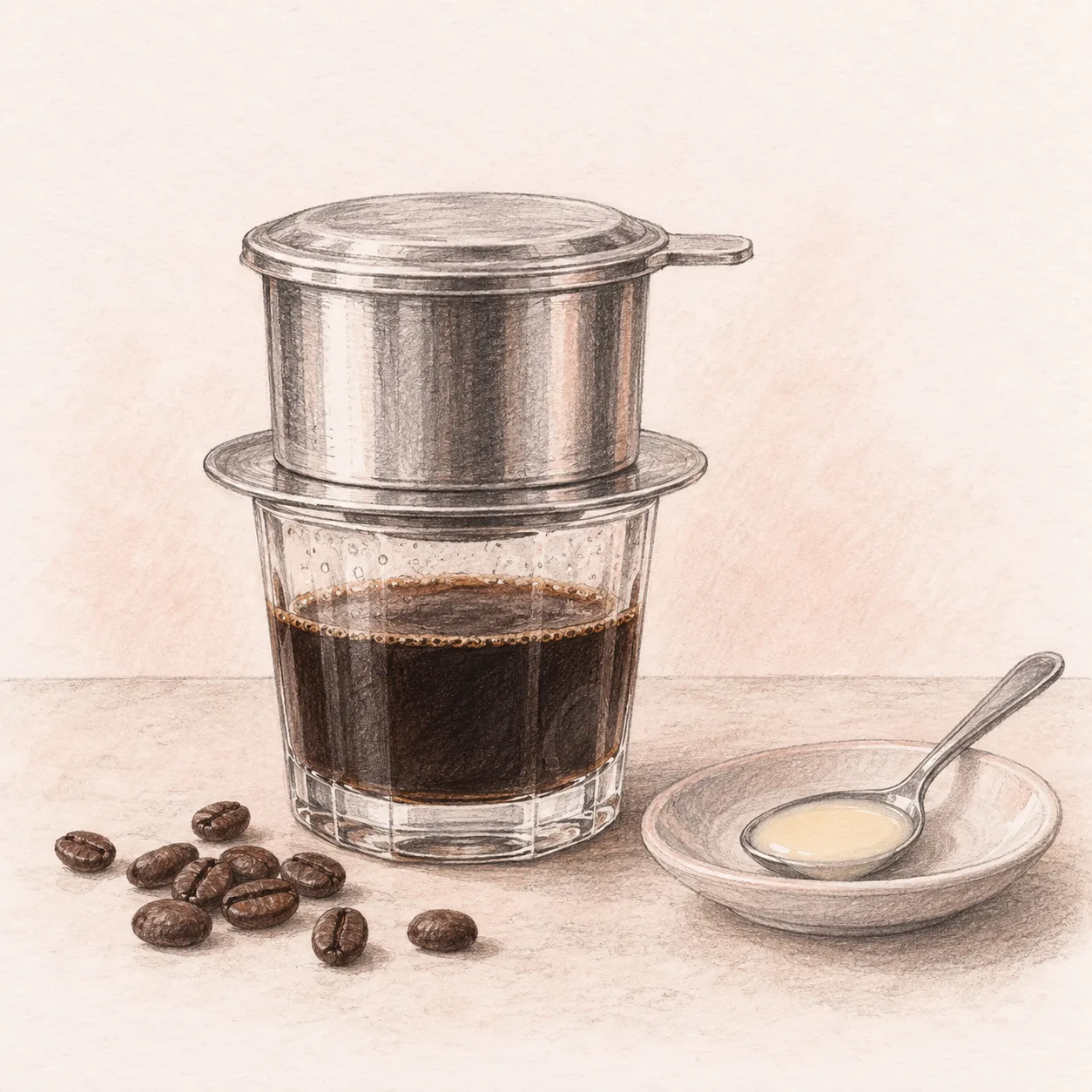
Vietnamese Coffee Phin Filter (2026): How to Pick One and Brew It
Brew
The Vietnamese coffee phin filter to buy first is the Thang Long 8 oz for a single cup, with the Birdee 12 oz for a bigger brew and Trung Nguyen Legend as the coffee to put in it.
Our picks
A Vietnamese coffee phin filter makes one thing very well: a small, strong, slow-dripped cup that stands up to condensed milk and ice. It is a metal cylinder with a press plate, and it costs less than most brewers on the shelf.
The phin is not fussy about gear, but it is fussy about two things. The grind has to sit in a narrow band, and the water has to go in slowly. Get those right and a six-dollar filter makes a better cafe sua da than most cafes near you.
This fits with the rest of the brew guides and the main pour-over coffee maker roundup, since both are paper-free or paper-light, slow-drip methods. If you want a different single-cup brewer, the AeroPress and the moka pot are the closest cousins.
How a phin filter works
A phin has four parts: the cup plate, the brew chamber, the press insert, and the lid. You set the chamber on a cup, add ground coffee, and level it.
Then you drop the press insert on top. Some phins use a screw-down press that you tighten by feel, and some use a gravity insert that simply sits on the bed. Then you pour hot water and wait.
The water passes slowly through the coffee and the perforated base. The result is a concentrated cup, usually drunk with condensed milk or over ice. The whole brew takes five to seven minutes.
What to look for in a phin
Stainless steel. It holds heat, does not react with coffee, and cleans up with a rinse. Skip anything with a plastic brew chamber.
A gravity or screw press you can seat evenly. An uneven press leaves a gap, and the water channels through it instead of the whole bed.
A size that fits your cups. The 8 oz is the standard single cup. The 12 oz and up need a wider mug or a small carafe under them.
A four-piece build. The lid doubles as a drip catcher after brewing, which matters more than it sounds.
A gasket-free, simple design. Fewer parts means less to lose and less to clean. Dishwasher-safe is a bonus.
Quick comparison
Shop: Thang Long 8 oz · Birdee 12 oz · Trung Nguyen Legend
Top pick: Thang Long 8 oz
The Thang Long 8 oz is the classic phin and the best one to buy first. It is stainless steel, made in Vietnam, and comes as a four-piece set with a gravity insert, a lid, and a cup plate.
The gravity insert is the reason to start here. It is easier to seat than a screw-down press and it is hard to over-tighten, which is the most common way a first phin brew goes wrong. The 8 oz size brews a single cup of about six to seven ounces.
It is dishwasher safe and carries a lifetime warranty on the listing. The main thing to know is grind: go finer than drip, and the drip slows to a rich, steady stream.
Who it is for: A first phin and a daily single cup.
Check price: Thang Long 8 oz on Amazon
Larger brew: Birdee 12 oz
The Birdee 12 oz is the pick when one small cup is not enough. Its larger chamber brews a bigger serving or a small shared pot, and the all-stainless body is dishwasher safe.
It works for both hot and iced coffee, so it covers the traditional hot cup and the cafe sua da over ice. The gift-box packaging makes it a low-risk present for someone curious about Vietnamese coffee.
The trade is the insert. It is thinner than the classic filters, so handle it gently if you travel. At home it seats fine and drips evenly in about five minutes.
Who it is for: A larger cup, a shared pot, or a gift for a coffee-curious friend.
Check price: Birdee 12 oz on Amazon
The coffee: Trung Nguyen Legend
The Trung Nguyen Legend Premium Blend is ground coffee made for this brewer. It leans on robusta with some arabica, which gives the cup body, a chocolate note, and the low acidity that makes condensed milk work.
It comes ground and ready, so you can brew it the day it arrives. If you prefer to grind your own, choose a medium-fine setting on a burr grinder. The coffee grinder guide covers the options.
Robusta carries more caffeine than arabica, so a single phin cup is a strong start to the day. Treat it like an espresso-sized kick rather than a mug of drip.
Who it is for: Anyone who wants the traditional taste without hunting down a specific roast.
Check price: Trung Nguyen Legend on Amazon
Brew a cup of cafe sua da
- Set the phin chamber on a cup with about two tablespoons of condensed milk in the bottom.
- Add 15 to 20 grams of finely ground coffee and level it. Do not press it down.
- Place the gravity insert or screw the press down just until it touches the bed.
- Add a small splash of hot water and wait 30 seconds for the grounds to bloom.
- Fill the chamber with hot water, put the lid on, and let it drip for five to seven minutes.
- Stir the coffee into the condensed milk, then pour it over ice for a cold cup.
If the drip is too fast, grind finer next time. If it stalls, grind coarser or press the insert more lightly.
Grind, water, and the mistakes that ruin a phin
Too coarse. The water runs straight through and the cup tastes weak and sour. Go finer.
Too fine. The bed clogs, the drip stalls, and fine particles reach the cup. Ease off one step.
Water off the boil. A rolling boil scalds the grounds. Let it sit for a moment, or aim for just under boiling.
Pressing the insert hard. The insert seats the bed, it does not compact it. Pressing down causes a slow, uneven drip.
Not pre-wetting. A quick bloom settles the grounds so the water flows evenly through the whole bed.
Not cleaning the filter. Old oils in the perforations turn the next cup stale. Rinse it right after brewing and it stays clean.
Who should skip a phin filter
Skip it if you want a big mug of coffee, because a phin makes a small, strong cup and not a full pot. A French press or a batch brewer is the better fit for volume.
Skip it if you do not want a slow, hands-on morning brew. A phin takes patience, and rushing it defeats the point.
Skip it if you only drink light, fruity coffee. A phin is at its best with a dark or medium roast, and a delicate single origin can get lost.
Bottom line
Buy the Thang Long 8 oz as the Vietnamese coffee phin filter to start with. It is simple, sturdy, and makes the classic cup. Choose the Birdee 12 oz for a bigger brew or a gift, and brew Trung Nguyen Legend for the traditional robusta taste.
Then go fine on the grind and slow on the pour. For more brew gear, browse the brew guides or the pour-over coffee maker roundup.
Frequently Asked Questions
What is a phin filter?
A phin is a small stainless steel Vietnamese coffee dripper. You add ground coffee, press it with a metal plate, pour hot water, and let it drip slowly into the cup. It uses no paper filters and makes a strong, concentrated cup.
What size phin filter do I need?
An 8 oz phin makes one classic cup, which is what most people want. A 12 oz phin makes a larger cup or a small shared pot. The largest sizes can seat their press unevenly, so the 8 oz and 12 oz are the safe picks.
What grind should I use in a phin filter?
Finer than you would use for drip, closer to fine sand. A medium-coarse grind runs through too fast. A fine grind slows the drip and deepens the cup, as long as it is not so fine that it clogs or clouds the coffee.
How long should a phin drip?
About five to seven minutes for a normal cup, longer for larger sizes and finer grinds. If it finishes in two minutes, your grind is too coarse. If it stalls, your grind is too fine or you pressed the plate too hard.
Do I need condensed milk for Vietnamese coffee?
No, but it is the traditional pairing. Condensed milk with a strong robusta drip is the classic cafe sua da. If you drink it black, add a little hot water to soften the intensity.
Can I use a phin filter for other coffee?
Yes. It works with any dark or medium roast ground fine enough, including regular espresso blends. Vietnamese robusta is the traditional choice because its bold, low-acid flavor carries through the milk.
Is a phin better than a French press?
It makes a different cup. A phin gives you a stronger, more concentrated brew with a cleaner body and no plunging step. A French press is more forgiving and makes more at once. Both are simple, but the phin is the one for Vietnamese coffee.